Breathe Deep, Pay More: The American Geography of Healing That Never Healed Anyone
The Original Wellness Industry
In 1783, when George Washington rode to Berkeley Springs to soak his aching joints in water that bubbled up from Virginia limestone, he wasn't just taking a vacation—he was participating in America's first medical tourism industry. The springs had been marketed to colonial elites as a cure for everything from rheumatism to melancholy, and Washington, like thousands of others, was willing to pay premium prices for the possibility that geography might succeed where medicine had failed.
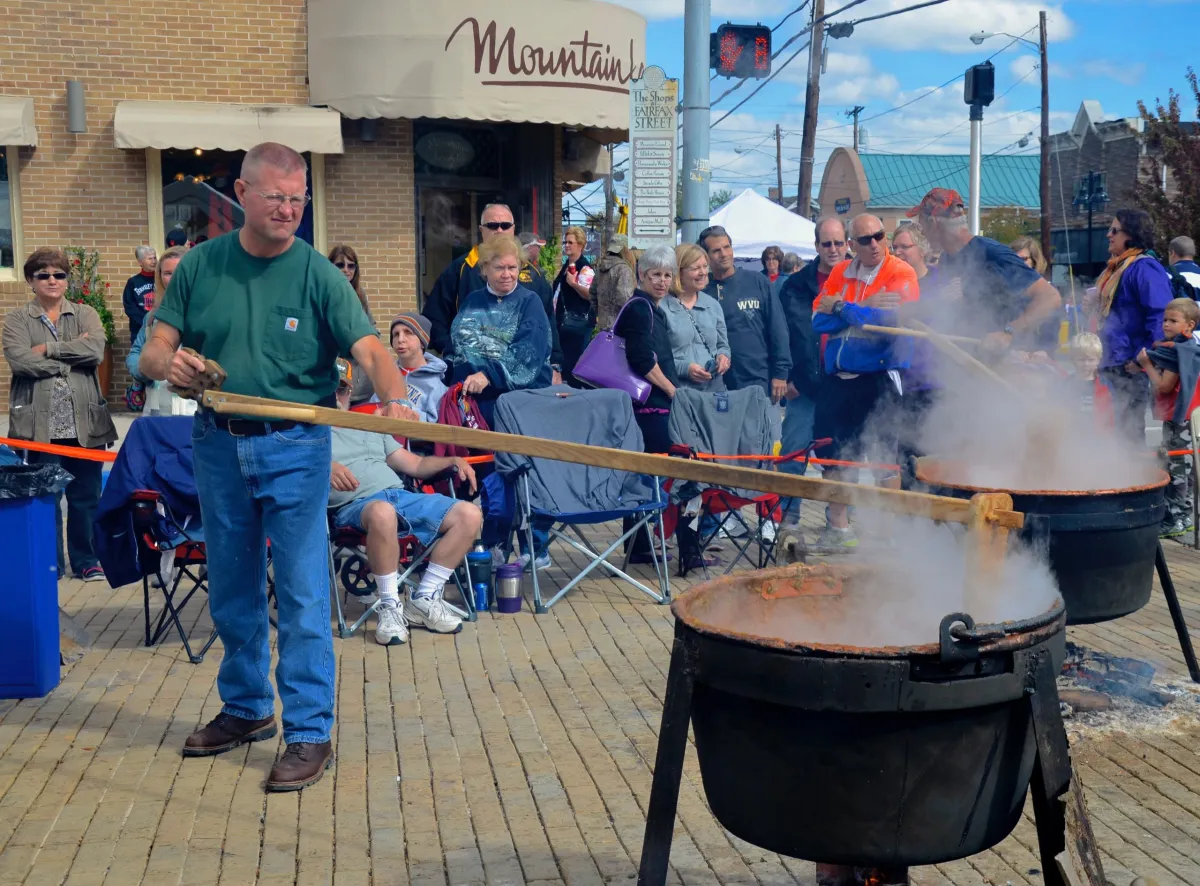 Photo: Berkeley Springs, via berkeleysprings.com
The buildings that housed this early wellness industry still stand throughout the mid-Atlantic: grand hotels with marble lobbies designed to inspire confidence, bathhouses with classical columns that suggested ancient Roman authority, and treatment rooms where the architecture itself was part of the therapy. These weren't just places to stay—they were monuments to the American belief that the cure was always somewhere else.
Human psychology hasn't changed in five thousand years, and neither has our willingness to travel great distances for treatments that promise more than they can deliver. What has changed is how sophisticated the marketing has become, and how elaborate the buildings designed to house our hope.
The Federal Prescription
By the 1880s, the geography of healing had become so central to American medicine that the federal government got into the business. Hot Springs, Arkansas, was designated as a federal reservation—the only place in America where the government directly managed medical tourism. The logic was simple: if location-based cures were legitimate medicine, they deserved official oversight.
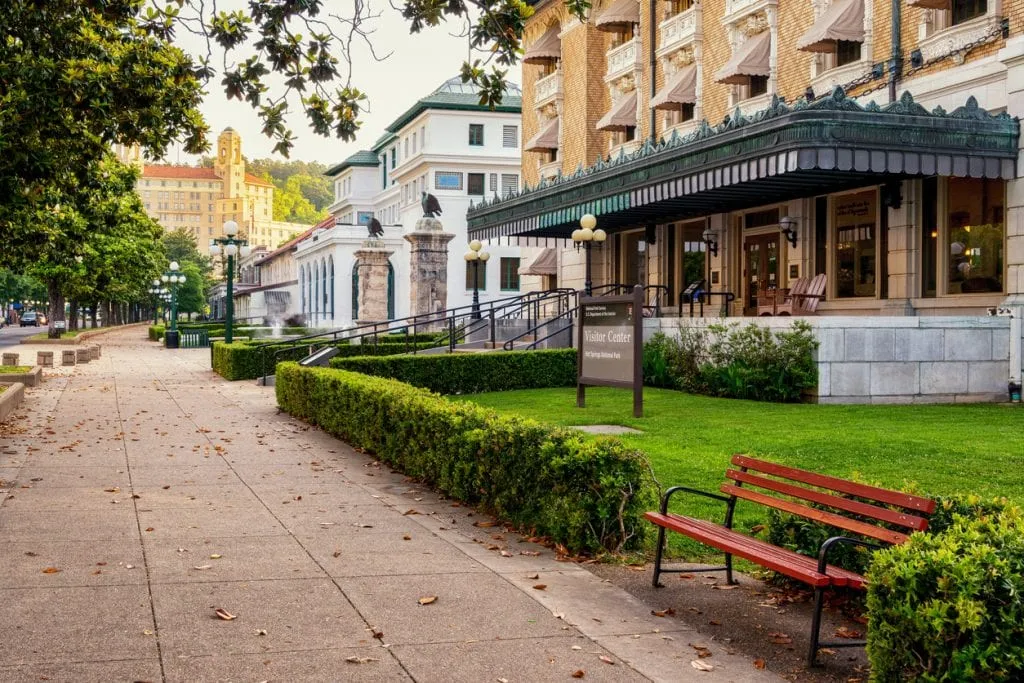 Photo: Hot Springs, Arkansas, via www.atlantaparent.com
The result was a town built entirely around the promise that soaking in naturally heated water could cure diseases that had stumped the best doctors on the East Coast. The bathhouses that lined Central Avenue weren't just treatment facilities—they were architectural arguments for the power of place over pathology.
Walk through Hot Springs today and you can still see the buildings designed to convince sick people that they'd found salvation. The Fordyce Bathhouse, now a museum, preserves the marble halls and stained glass windows that once made hydrotherapy feel like a religious experience. The Quapaw Baths still operates, offering the same treatments that attracted visitors 150 years ago, with the same architectural grandeur that made the medicine feel more powerful than it was.
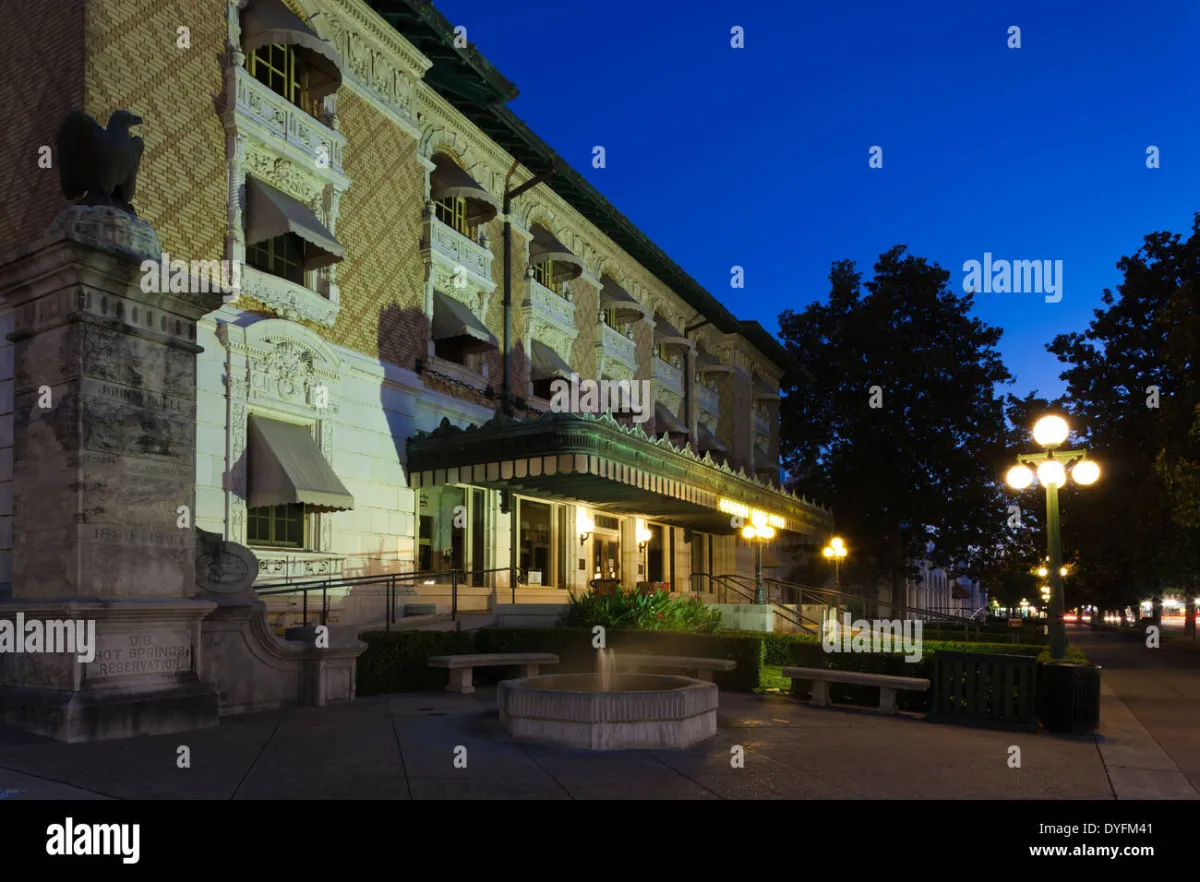 Photo: Fordyce Bathhouse, via c8.alamy.com
The psychology was brilliant: the more impressive the building, the more effective the treatment seemed. Patients weren't just paying for mineral water—they were paying for the experience of feeling like their illness was important enough to deserve such magnificent surroundings.
The Tuberculosis Express
The most elaborate example of America's faith in geographical cures came with the tuberculosis epidemic of the early 20th century. When medical science had no effective treatment for the disease that killed one in seven Americans, the cure industry moved west, marketing the dry air of Arizona and Colorado as medicine you could breathe.
The result was an entire regional economy built around dying people. Sanitariums sprouted across the Southwest, each one designed to look more like a resort than a hospital. The Desert Sanatorium in Tucson featured Spanish Colonial architecture that made tuberculosis treatment feel like a luxury vacation. The National Jewish Hospital in Denver built treatment pavilions that looked like mountain lodges, complete with fireplaces and panoramic windows that turned the view itself into therapy.
These weren't just medical facilities—they were architectural promises that geography could accomplish what medicine couldn't. The buildings were designed to inspire confidence in patients who had often spent their life savings for the chance that Arizona air might succeed where East Coast doctors had failed.
Many of these sanitariums still exist, converted to other uses but preserving the architectural optimism of an era when Americans believed that the right location could cure anything. The Barrow Neurological Institute in Phoenix occupies buildings originally constructed for tuberculosis patients. The University of Colorado's medical campus sits on land that was once the site of the world's largest tuberculosis sanitarium.
The Modern Pilgrimage
Today's wellness industry has inherited both the psychology and the architecture of America's historical geography of healing. The luxury medical resorts of Scottsdale, the cancer treatment centers of Houston, and the addiction recovery facilities of Malibu all follow the same pattern: impressive buildings in carefully chosen locations, marketing the idea that the right environment can accomplish what conventional medicine cannot.
The Mayo Clinic didn't accidentally choose Rochester, Minnesota—they chose a location that felt removed from the medical establishments of major cities, a place where patients could believe they were getting something unavailable elsewhere. The Cleveland Clinic's campus is designed like a small city, creating the impression that healing requires not just treatment but an entire environment dedicated to wellness.
Even modern alternative medicine follows the geographical cure playbook. The Hippocrates Health Institute in West Palm Beach occupies a campus designed to look like a tropical paradise, where the architecture reinforces the message that healing happens in beautiful places. The Gerson Institute's treatment facilities in Mexico are built to feel like retreats rather than hospitals, using design to distinguish alternative treatments from conventional medicine.
The Architecture of Hope
What all of these places share—from 18th-century mineral springs to 21st-century wellness resorts—is architecture designed to make hope feel rational. The buildings don't just house treatments; they embody the promise that this place, this approach, this environment might be different from all the others that have failed.
The psychology is consistent across centuries: when people are desperate enough to travel for treatment, they're also ready to believe that impressive buildings and beautiful locations are signs of medical effectiveness. The more the facility looks like a place where miracles might happen, the more likely patients are to believe that miracles will happen.
This isn't necessarily fraudulent—many of these facilities provide real medical care, and some patients do get better. But the architecture is doing psychological work that has nothing to do with medical science, creating an environment where hope feels justified regardless of the actual treatment outcomes.
The Persistent Geography of Wishful Thinking
The American faith in geographical cures reveals something fundamental about human psychology: when conventional solutions fail, we're willing to believe that the answer might be found somewhere else, ideally somewhere that requires us to travel, pay more, and commit to an entirely different approach.
This impulse appears in medical records going back to ancient Greece, but America turned it into an industry. We built an entire economy around the idea that the cure was always somewhere else—preferably somewhere with impressive buildings, beautiful views, and prices that made the treatment feel exclusive.
The buildings that housed this industry tell the real story of American medical tourism: not the story of breakthrough treatments or miracle cures, but the story of how architecture and geography were used to sell hope to people who had run out of conventional options.
Today, you can visit these monuments to geographical wishful thinking throughout the country. The mineral spring resorts of Virginia, the former sanitariums of Arizona, the wellness centers of California—they're all part of the same tradition, built on the same psychology, selling the same promise that has attracted desperate Americans for three centuries: that the cure you need is waiting for you somewhere else, in a building beautiful enough to make you believe it might actually work.