The Cities That Almost Ran America: A Traveler's Guide to the Capitals That Never Were
The Cities That Almost Ran America: A Traveler's Guide to the Capitals That Never Were
The story Americans tell about Washington D.C. tends to have an air of inevitability to it — a purpose-built capital for a purpose-built republic, rising from the Potomac marshland as if ordained. The actual story involves a dinner table, a debt crisis, Alexander Hamilton's desperation, and Thomas Jefferson's willingness to trade what he wanted for what he needed. The capital is where it is because of a specific deal made on a specific evening in June 1790. Change one variable and you change everything.
The cities below all had serious, documented claims to the seat of American government. They lost for reasons that had less to do with geography or merit than with timing, ego, and the particular chaos of a new country figuring itself out in real time. Each one left behind something worth seeing — the architectural fingerprints of a moment when they thought they were going to be the center of everything.
Philadelphia, Pennsylvania — The City That Already Was the Capital
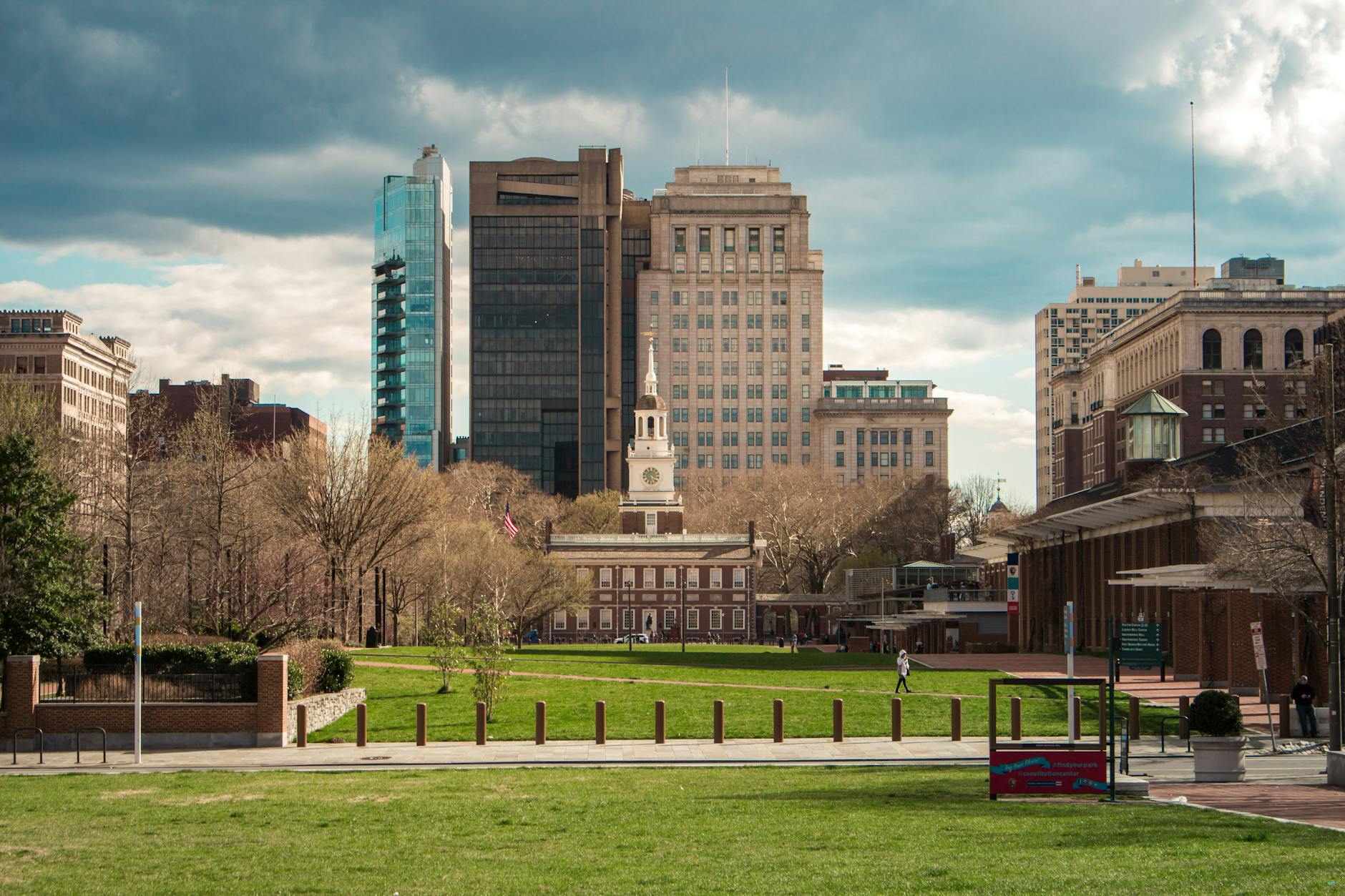
What almost happened: Philadelphia didn't almost become the capital — it was the capital, twice. The Continental Congress met there. The Constitution was written there. From 1790 to 1800, while Washington D.C. was being built, Philadelphia served as the official seat of the federal government. The reasonable assumption at the time was that it might just stay that way.
The argument for Philadelphia was overwhelming on paper: largest city in the country, established financial infrastructure, proximity to both northern and southern states, and the symbolic weight of Independence Hall. The argument against it was largely Virginian — Southern delegates were deeply uncomfortable with the idea of a permanent capital in a northern commercial city with a powerful Quaker abolitionist movement.
What to see: Independence Hall is the obvious starting point, but the real Philadelphia for history travelers is the area around Old City. The President's House site on Market Street — where Washington and Adams actually lived and worked during those ten years — now has a haunting open-air memorial that confronts the full complexity of the period, including the enslaved people who lived and worked there. The First Bank of the United States, the oldest bank building in the country, is two blocks away and still standing. Philadelphia's built environment is the closest thing America has to a capital that got away.
Annapolis, Maryland — The Forgotten Moment
What almost happened: For a brief, genuinely plausible window between 1783 and 1784, Annapolis was the capital of the United States. The Continental Congress met there. The Treaty of Paris was ratified there. George Washington resigned his commission as commander of the Continental Army in the Maryland State House — which still stands, making it the oldest state capitol building in continuous legislative use in the country — on December 23, 1783. For a few months, Annapolis had every reason to believe it was on the permanent shortlist.
It lost out largely because it was too small and too difficult to supply and defend. The infrastructure simply wasn't there. But the ambition was, and it left a mark.
What to see: The Maryland State House dome is visible from most of the historic district, and the interior — including the room where Washington gave his resignation speech — is open to visitors. The city's 18th-century street grid is remarkably intact. Walking from the State House down to the waterfront, past the Georgian architecture of the colonial merchant class, you're moving through a city that had one very good year and has been quietly proud of it ever since.
New York City, New York — First in Everything, Except This
What almost happened: New York City was the first capital of the United States under the Constitution. George Washington was inaugurated at Federal Hall on Wall Street on April 30, 1789. The first Congress met there. The first Supreme Court convened there. For about a year, New York was the unambiguous center of the new American government.
The city lost the capital for reasons that are almost purely political. Southern states — particularly Virginia — were not going to accept a permanent capital in New York. The Compromise of 1790, brokered largely at that famous dinner between Hamilton, Jefferson, and Madison, traded the assumption of state debts (which Hamilton desperately needed) for a Southern-leaning capital location on the Potomac. New York got Hamilton's financial system. The country got Washington D.C. New York, being New York, eventually decided this was fine.
What to see: Federal Hall National Memorial on Wall Street stands on the site of the original building (the current structure is a later Greek Revival replacement, built in 1842). The statue of Washington on the steps marks the exact spot of the inauguration. It's one of the most visited — and most overlooked — historic sites in Manhattan, because it sits in the middle of the financial district and most people walking past it are focused on other things. Stop. Look at it. This was the center of American government for a year.
St. Louis, Missouri — The Western Dream
What almost happened: St. Louis never had a formal legislative bid for the capital in the founding era, but by the mid-19th century, as the country expanded westward at a pace nobody had anticipated, the idea of a more centrally located capital gained serious traction. Missouri Senator Thomas Hart Benton — one of the most influential politicians of the antebellum period — was an aggressive advocate for St. Louis as the natural hub of a continental nation. The argument wasn't crazy: St. Louis sat at the confluence of the Missouri and Mississippi rivers, was the gateway to the entire western expansion, and by 1850 was one of the fastest-growing cities in the country.
The Civil War effectively ended the conversation. St. Louis's position as a border city, and Missouri's tortured relationship with the conflict, knocked it off any serious national trajectory. The capital stayed where it was.
What to see: The Gateway Arch is the obvious landmark, but the Museum at the Gateway Arch underneath it tells the story of St. Louis's genuine moment as the fulcrum of American expansion. The Old Courthouse nearby — where the Dred Scott case was first tried — is a more complicated monument to what the city actually was during its years of ambition. Laclede's Landing, the restored 19th-century riverfront warehouse district, gives you the physical texture of the commercial city that thought it might one day be the center of everything.
The Lesson the Map Is Teaching
The thread connecting all of these cities is that none of them lost because they were unworthy. They lost because history isn't a meritocracy — it's a sequence of contingent decisions made by specific people under specific pressures. Washington D.C. exists because of debt politics, regional paranoia, and a dinner party.
That's not a cynical reading. It's an accurate one. And the cities that lost are more interesting to travel through for it — they carry the particular energy of places that reached for something enormous and came away with a story instead.