Divine Defendants: The American Tradition of Suing Acts of God
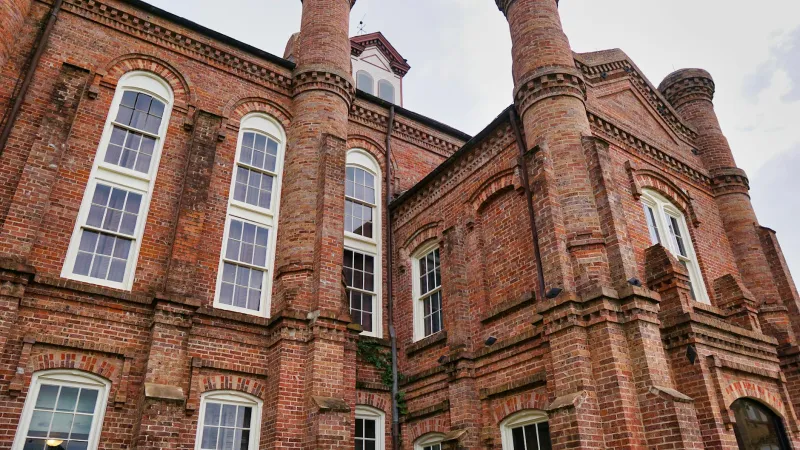
In the basement of the Sedgwick County Courthouse in Wichita, Kansas, sits a file cabinet that contains one of the most American documents ever produced: a formal lawsuit filed against God in 1970 by a farmer whose wheat crop was destroyed by hail. The case was dismissed on jurisdictional grounds—the court ruled it lacked authority over divine entities—but the filing itself reveals something fundamental about how Americans process collective trauma. When disaster strikes, our first instinct isn't to accept it as fate or divine will. Our first instinct is to find someone to sue.
This isn't a modern phenomenon born of our supposedly litigious culture. Since the earliest days of American settlement, communities facing natural disasters have responded with lawsuits, and the defendants have ranged from the predictable (railroad companies, municipal governments, insurance firms) to the creative (weather modification companies, federal agencies, Native American tribes) to the metaphysical (God, Satan, and in one memorable case, "the forces of nature acting in concert").
The courthouses, legal archives, and surviving documentation from these cases tell a story about American psychology that's remained consistent for over 300 years: we believe every problem has a responsible party, every tragedy has a liable defendant, and every act of God is actually an act of negligence by someone with deeper pockets.
The Courthouse as Trauma Processing Center
Visit the old courthouse in Galveston, Texas, and you can still see the high-water marks from the 1900 hurricane that killed over 6,000 people. But the more interesting historical artifacts are in the legal records: within six months of the disaster, the city faced over 200 lawsuits from survivors seeking damages. The defendants included the U.S. Weather Bureau (for inadequate warnings), the city government (for poor drainage), various railroad companies (for inadequate evacuation), and the Galveston Wharf Company (for failing to secure waterfront structures that became deadly projectiles).
What's remarkable about the Galveston litigation isn't that people sued—it's how systematic and comprehensive the legal response was. Survivors didn't just file individual claims; they organized into plaintiff groups with coordinated legal strategies. They hired out-of-state attorneys who specialized in disaster litigation. They conducted their own investigations, commissioning engineering studies and meteorological analyses that were more thorough than anything the government produced.
The Galveston courthouse became a secondary disaster site—a place where the community processed trauma by transforming it into legal arguments. The architecture itself reflects this function: the building was redesigned after the hurricane with larger courtrooms, expanded records storage, and a dedicated space for displaying evidence in complex multi-party cases. The courthouse wasn't just rebuilt; it was rebuilt specifically to handle disaster litigation.
When Towns Sue God (And Sometimes Win)
The most fascinating cases are the ones where communities literally sued divine entities. These weren't frivolous lawsuits filed by cranks—they were serious legal strategies developed by town councils and business associations facing insurance companies that refused to pay claims for "acts of God."
In Chambers, Nebraska, the town council filed a lawsuit against God in 1902 after a tornado destroyed the business district. The legal theory was straightforward: if insurance companies could avoid paying claims by classifying disasters as "acts of God," then God should be held legally responsible for the damages. The case was obviously dismissed, but it achieved its intended purpose—the insurance companies settled rather than argue in court that God was immune from liability while simultaneously claiming that God's actions voided their policies.
The strategy worked so well that it spread. By 1910, at least a dozen American towns had filed similar suits against divine entities, and the legal tactic had evolved into a standard form of insurance litigation. Law schools began teaching courses on "theological jurisprudence," and several states passed laws clarifying the legal status of supernatural defendants (spoiler alert: they have none).
You can still visit the courthouse in Chambers where the original God lawsuit was filed. It's now a museum, and the display case contains the original legal documents alongside newspaper coverage from around the world. What started as a small-town legal strategy became international news because it perfectly captured something universal about human psychology: when bad things happen, we need someone to blame, even if we have to sue the creator of the universe to find them.
The Architecture of Blame
The physical spaces where disaster litigation played out reveal how central this process became to American community life. Courthouses built during the peak disaster litigation period (roughly 1870-1930) share distinctive architectural features: oversized evidence rooms, specialized storage for large-scale exhibits like building fragments and machinery parts, and courtroom designs that could accommodate dozens of plaintiffs and defendants simultaneously.
The federal courthouse in San Francisco, rebuilt after the 1906 earthquake, includes features specifically designed for disaster cases: a courtroom with movable walls that could be expanded for mass litigation, a basement vault for storing evidence from destroyed buildings, and offices designed to house the teams of out-of-state attorneys who descended on the city after major disasters.
These architectural modifications weren't just practical—they were psychological. Communities needed physical spaces where they could transform their trauma into legal arguments, where they could take their anger and grief and channel it into something that felt like productive action. The courthouse became a place where disaster victims could fight back, even when there was no one to fight.
The Psychology of Liability
What the historical record reveals is that disaster litigation was never really about money—it was about meaning. Americans have always struggled with the concept of random tragedy, and the legal system provided a framework for transforming meaningless suffering into purposeful conflict.
This explains why disaster lawsuits often targeted defendants who clearly weren't responsible for the disaster itself. After the 1871 Chicago Fire, survivors sued not just the owner of the barn where the fire allegedly started, but also the city's fire department, various insurance companies, and the manufacturers of firefighting equipment used in other cities. The legal theories were often absurd, but the psychological function was clear: by creating a comprehensive list of defendants, survivors could construct a narrative where the disaster was the result of human failures rather than random chance.
The pattern persists today, but with modern defendants. After Hurricane Katrina, survivors filed lawsuits against the Army Corps of Engineers, various insurance companies, oil companies (for weakening the wetlands), and the federal government. After 9/11, families sued airlines, airport security companies, the Port Authority, and the government of Saudi Arabia. The specific defendants change, but the underlying psychology remains the same: Americans process trauma by looking for someone to sue.
The Modern Descendants
Travel to any American city that's experienced a major disaster in the past 50 years, and you'll find the same pattern: within months of the tragedy, the courthouse becomes ground zero for a complex web of litigation that can last for decades. The legal strategies have become more sophisticated, but the basic function remains unchanged—communities use the legal system to process collective trauma by transforming it into adversarial proceedings.
The difference today is that we've professionalized the process. There are now law firms that specialize in disaster litigation, traveling from tragedy to tragedy like legal first responders. There are consulting firms that help communities identify potential defendants, and insurance companies that exist solely to defend against disaster-related lawsuits.
But the psychology driving the whole system is the same psychology that led a Nebraska town council to file a lawsuit against God in 1902: when bad things happen, Americans need someone to blame, someone to fight, someone to hold responsible. The legal system provides a socially acceptable way to channel that need, transforming grief into grievances and tragedy into torts.
The next time you drive through an American town that's been rebuilt after a disaster, remember that you're not just seeing the physical reconstruction—you're seeing the result of a legal and psychological process that's been going on for centuries. Somewhere in that town, there's probably a courthouse with files full of lawsuits against defendants ranging from the practical to the impossible, filed by people who understood something fundamental about American psychology: we'd rather sue God than admit that some things are nobody's fault.