Ghosts of the Iron Horse: How Railroad Barons Decided Which Towns Would Live or Die
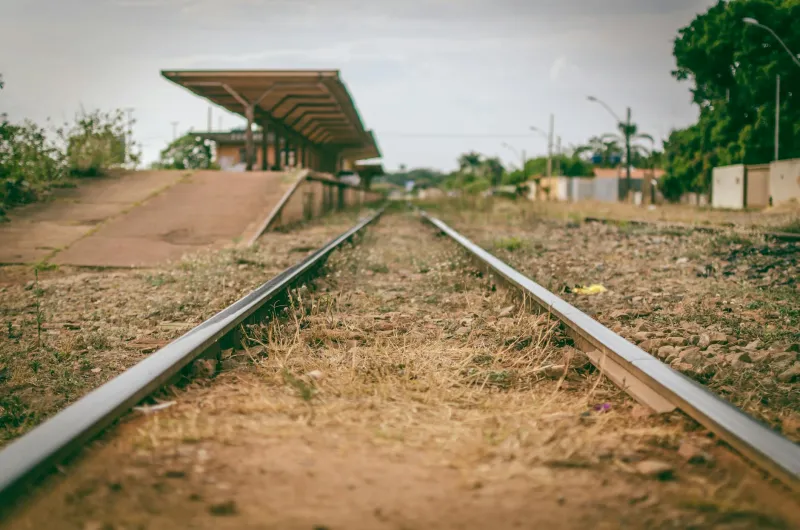
The Map That Never Was
Drive through the American Midwest today and you'll notice something odd about the spacing between towns. They're not where logic says they should be—not at river crossings or mountain passes or natural harbors. Instead, they sit exactly where 19th-century railroad executives decided to put them, spaced like beads on a string according to the carrying capacity of a steam locomotive and the negotiating skills of local boosters.
This isn't ancient history. It's a psychology experiment conducted at continental scale, and we're still living in its results.
The human brain hasn't changed since the 1870s. The same cognitive biases that made railroad executives choose bribes over engineering efficiency still drive infrastructure decisions today. We just call them "public-private partnerships" now and pretend they're more sophisticated than a suitcase full of cash changing hands in a Chicago hotel room.
When Geography Lost to Greed
Consider the ghost towns of Kansas. Not the romantic ruins you see in Western movies, but the invisible ones—places that existed only on paper, in the fevered imagination of land speculators who thought they could will a city into existence by printing maps.
In 1885, the town of Ravanna, Kansas, had everything going for it. Rich soil, a natural spring, proximity to existing trade routes. What it didn't have was the right connections to the Atchison, Topeka & Santa Fe Railway. Twenty miles south, the scrubland settlement of Dodge City offered the railroad company something more valuable than water or fertile ground: a sweetheart deal on land grants and a mayor willing to look the other way on certain freight regulations.
Today, Dodge City is a thriving regional hub. Ravanna exists only in county records and the fading memories of local historians.
This pattern repeated across the continent with mechanical precision. The railroad companies had figured out something that modern behavioral economists would later formalize: people don't make rational decisions based on objective conditions. They make emotional decisions based on immediate incentives, then rationalize them afterward.
The Psychology of Inevitability
Here's where the psychology gets interesting. Travel through these regions today and ask locals why their town succeeded where others failed, and you'll hear stories about "natural advantages" and "entrepreneurial spirit." The railroad barely gets mentioned, as if those steel rails laid themselves according to some natural law.
This is the same cognitive bias that makes lottery winners attribute their success to hard work and makes us believe traffic jams are acts of God rather than the predictable result of urban planning decisions made by specific people in specific meetings.
The railroad age offers us a perfect laboratory for studying human nature because the decisions were so stark and the outcomes so permanent. Unlike psychology experiments conducted on college students for beer money, this experiment involved real money, real power, and real consequences that lasted for generations.
Lessons from the Depot
Visit the railroad museums scattered across the Plains states and you'll find something fascinating in their exhibits: the original route maps, covered in pencil marks and erasures. These weren't engineering documents. They were negotiation records, showing how routes changed based on who offered what.
The Central Pacific's route through California got redrawn seventeen times between initial survey and final construction. Not because of new geological discoveries or engineering breakthroughs, but because of political pressure, financial incentives, and good old-fashioned corruption.
Every pencil mark on those maps represented a town that would live or die, fortunes that would be made or lost, families that would prosper or scatter. The executives making those marks weren't thinking about generations of consequences. They were thinking about quarterly profits and personal advancement—the same psychological drivers that shape infrastructure decisions today.
The View from the Caboose
The most telling artifact in these museums isn't the gleaming locomotives or the elaborate passenger cars. It's the station logs—mundane records of which towns got scheduled stops and which got bypassed. These logs reveal the raw economics of 19th-century development: towns didn't grow because they deserved to grow, but because someone with power over train schedules decided they should.
This matters for modern travelers because we're still navigating the psychological landscape those railroad executives created. When we drive Interstate highways that curve inexplicably around certain towns while cutting straight through others, we're following the ghost of those old rail routes. When we wonder why some small cities have thriving downtowns while others are just strip malls and gas stations, we're seeing the century-old consequences of decisions made in corporate boardrooms.
The Permanent Temporary
The railroad companies told themselves they were building temporary infrastructure—just steel and wood that could be moved when better opportunities arose. But human psychology doesn't work that way. Once people build homes and businesses around a railroad station, once they organize their lives around train schedules, once they start calling a place home, those "temporary" decisions become permanent geography.
We make the same mistake today with highways, airports, and fiber optic cables. We pretend we're making purely economic decisions that future generations can easily reverse. But psychology doesn't reverse. Once a place becomes home to someone, it develops its own momentum, its own political constituency, its own claim to survival.
The ghost towns of the railroad age remind us that what we call "natural" development is usually just someone else's business plan made permanent by time and habit. The next time you're driving through small-town America, remember: you're not seeing the inevitable result of geography and human nature. You're seeing the fossilized remains of negotiations conducted by people who died before your grandparents were born, but whose psychological biases still shape the landscape you call home.