We Were Certain Too: Six Places Where History's Worst Confident Decisions Are Still Visible
We Were Certain Too: Six Places Where History's Worst Confident Decisions Are Still Visible
There is a particular kind of historical tourism that functions as flattery. You stand at the site of some famous disaster, read the interpretive plaque, and walk away feeling vaguely superior to the people who made it happen. They were wrong. You know better. History is a parade of people who didn't understand what you now understand.
This is, to put it plainly, a waste of a good trip.
The more honest version of that experience — and the more useful one — goes like this: these people were not stupid. Many of them were the smartest, most experienced, most confident experts of their era. They had data. They had precedent. They had consensus. And they were catastrophically, sometimes lethally wrong in ways they could not see because the blindness was structural, not personal.
Future generations will stand somewhere and say the same thing about us. That's not pessimism. That's just what the historical record shows, over and over, with a consistency that ought to make anyone humble.
Here are six places where that lesson is available in person.
1. Cemetery Ridge, Gettysburg, Pennsylvania
On the afternoon of July 3, 1863, Robert E. Lee ordered approximately 12,500 Confederate soldiers to march across three-quarters of a mile of open field toward entrenched Union positions on Cemetery Ridge. The assault — known as Pickett's Charge — lasted roughly an hour. Confederate casualties were somewhere between 50 and 60 percent.
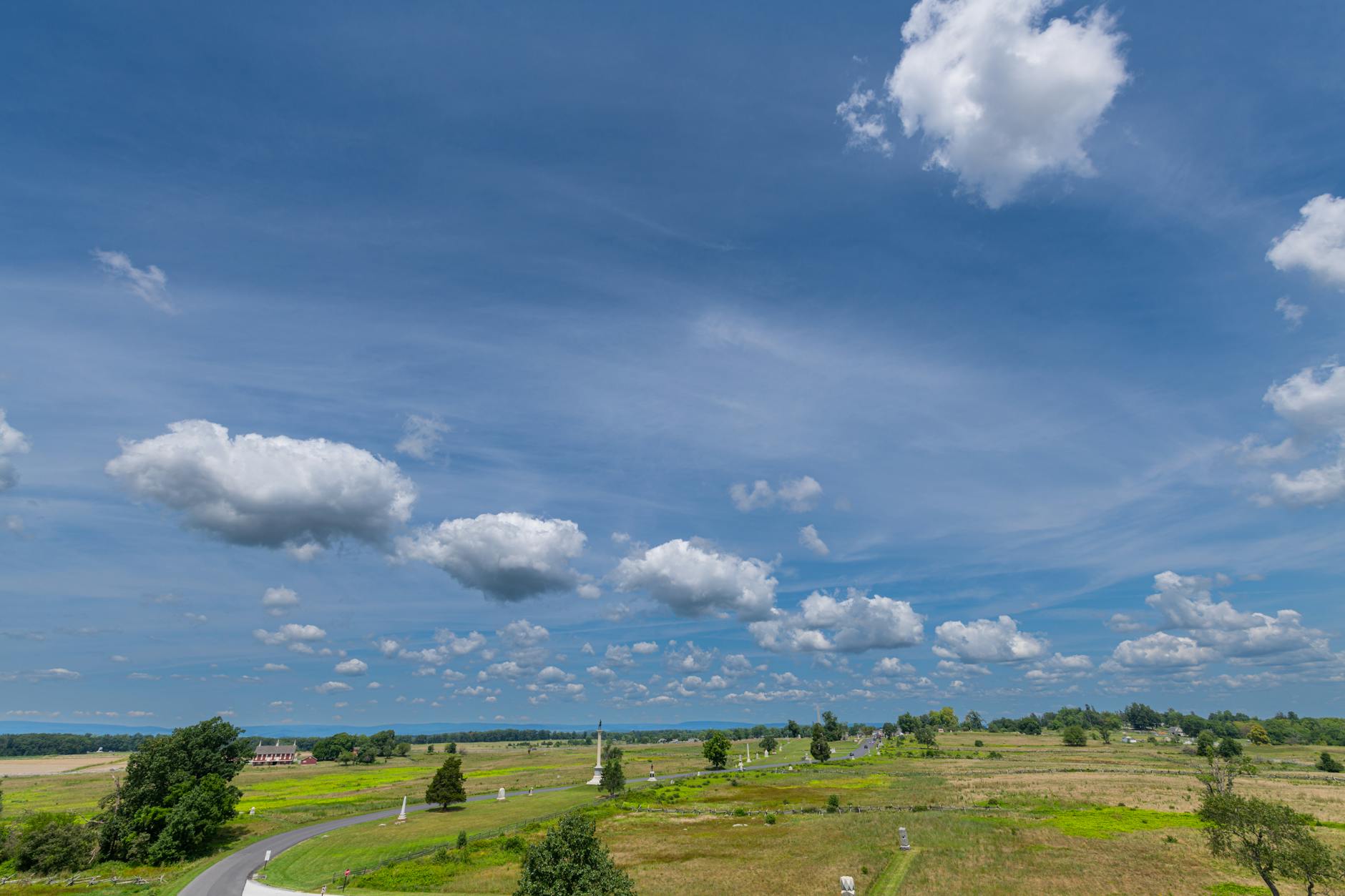
Stand on that field today and the first thing you notice is how open it is. There is no cover. There is no confusion about why this failed. It looks, from the ground, like exactly what it was.
But Lee was not a fool, and he was not operating on a whim. He had watched frontal assaults work earlier in the war. He had watched them work at Chancellorsville ten weeks earlier. He believed his army could do what other armies couldn't. He was operating on a model of warfare that had been accurate enough, often enough, that dismissing it felt like cowardice.
The model was simply wrong for that field, that day, against those defensive positions. The certainty that made Lee a great general in other contexts became the mechanism of failure here.
Gettysburg National Military Park is one of the most thoughtfully interpreted historical sites in the country. Go. Walk the charge route. The ground itself makes the argument.
2. The Pruitt-Igoe Site, St. Louis, Missouri
In 1956, the Pruitt-Igoe housing complex opened in St. Louis — 33 eleven-story towers housing nearly 15,000 people, designed by Minoru Yamasaki (who later designed the original World Trade Center) and celebrated as a model of modern urban planning. By 1972, the city was dynamiting it.
The failure of Pruitt-Igoe has been argued over by architects, sociologists, and urban planners ever since, but the core problem was simple: the people who designed it were certain they knew how poor urban residents should live, and they were wrong in almost every particular. The towers eliminated the street-level social infrastructure — the stoops, the corner stores, the sight lines — that made dense urban neighborhoods function. They replaced it with "streets in the sky," elevated walkways that became, in practice, unsupervised corridors where crime concentrated.
The site is now largely vacant land in the Jeff Vander Lou neighborhood. There's no grand monument. That's almost the point. The certainty that created 33 towers left behind empty grass.
3. The Sunken Road, Antietam, Maryland
On September 17, 1862, Confederate troops held a sunken farm road at Antietam for roughly three hours against repeated Union assaults. The road became so filled with Confederate dead that it earned a permanent name: Bloody Lane.
What's striking about Antietam — the bloodiest single day in American military history, with roughly 23,000 casualties — is how many of the decisions made that day were made by men who had been soldiers for decades. These were not amateurs. They were professionals operating on professional judgment, and the professional judgment produced a day that shocked even people who had already fought at Bull Run and Shiloh.
Antietam National Battlefield is about an hour from Washington, D.C. Walk Bloody Lane and notice that the road is still sunken. The geography that made it a defensive position in 1862 is still completely legible. You can see exactly why someone thought it was a good idea, and exactly why it became what it became.
4. The Embarcadero Freeway Footprint, San Francisco, California
For forty years, a double-decked elevated freeway ran along San Francisco's waterfront, blocking the view of the bay from downtown and cutting the Ferry Building off from the city it was supposed to serve. The Embarcadero Freeway was built in 1959 over loud objections from residents and city planners who argued it would damage the urban fabric of the waterfront. The California Division of Highways knew better.
The 1989 Loma Prieta earthquake damaged the structure enough to force a decision. The city tore it down. The Ferry Building, now visible from Market Street, became one of the most successful urban market spaces in the country. The waterfront became a destination.
The lesson isn't simply that the freeway was wrong. It's that the people who built it had the full institutional authority of mid-century American planning consensus behind them. They weren't rogue actors. They were the mainstream. And the mainstream was wrong in a way that took an earthquake to correct.
5. Cahokia Mounds, Collinsville, Illinois
Around 1050 CE, Cahokia was the largest city north of Mexico — a metropolis of perhaps 20,000 people at its peak, built around a ceremonial mound larger at its base than the Great Pyramid of Giza. By 1400, it was abandoned.
Archaeologists are still arguing about why. Climate change, agricultural exhaustion, political collapse, disease — the evidence supports pieces of all of it. What's clear is that the people who built Cahokia were sophisticated, organized, and operating at a scale that most Americans don't associate with pre-Columbian North America.
They also made decisions — about land use, about resource management, about political structure — that contributed to their city's disappearance. We don't know exactly which decisions, or exactly how. That uncertainty is itself the lesson. They didn't know they were making the decisions that would end their city. They thought they were running a civilization.
Cahokia Mounds State Historic Site is a UNESCO World Heritage Site and is badly undervisited by Americans who drive past it on I-55 without stopping. Stop.
6. Love Canal, Niagara Falls, New York
In the 1950s, the Hooker Chemical Company sold a former chemical waste disposal site to the Niagara Falls school board for one dollar, with a deed explicitly noting the buried waste. The school board built an elementary school on it. The city built a neighborhood around the school. By the late 1970s, chemicals were seeping into basements and yards, and the health outcomes in the neighborhood were catastrophic enough to prompt the first federal emergency declaration for an environmental disaster.
Every decision along the way was made by people with professional credentials and institutional authority who were certain, at each step, that the situation was manageable. The chemical company, the school board, the city planners, the state regulators — none of them were cartoonish villains. They were people making reasonable-seeming decisions inside a system that didn't yet have the framework to understand what they were actually doing.
The Love Canal neighborhood still exists, partially resettled, partially fenced off. The EPA Superfund program that emerged from it is a direct consequence of that confident wrongness.
Here's the thing about all six of these places. The people involved weren't operating in ignorance. They were operating in the best available knowledge of their time, with the full confidence that knowledge warranted, and they were wrong in ways they couldn't see.
Human psychology hasn't changed. We are running the same cognitive software as Robert E. Lee, the planners who built Pruitt-Igoe, and whoever decided that Cahokia's agricultural practices were sustainable. We are just as certain. We are just as credentialed. We have just as much consensus behind us.
Visiting these places isn't about feeling superior to the past. It's about the quiet, useful, deeply uncomfortable recognition that somewhere, right now, a decision is being made with complete confidence that future visitors will come to stand in front of and say: how did they not see it?
They'll be talking about us.