Love for Hire: How the Wedding Industry Invented Romance to Sell You a Trip
The Original Exit Strategy
In 1840s Britain, newlyweds didn't disappear to tropical beaches or mountain cabins. They went on what polite society called a "bridal tour"—a month-long circuit of relatives designed to accomplish one crucial task: keeping the new wife away from her family long enough for inheritance paperwork to clear. The romance was incidental. The legal maneuvering was everything.
These weren't vacations. They were strategic relocations orchestrated by families who understood that marriage was a business merger, and like any good merger, it required removing potential sources of interference. The bride's relatives might contest property transfers. The groom's family might reconsider the dowry arrangements. A month of enforced travel solved both problems while maintaining the fiction that love conquered all.
Human psychology hasn't changed since the 1840s. We still use geographic distance to avoid uncomfortable conversations and difficult relatives. We just call it "needing space" instead of "bridal tour."
The Railroad's Love Story
By the 1870s, American railroad companies had identified a problem: their passenger cars sat empty except during harvest season and major holidays. The solution came from studying those British bridal tours and realizing they could manufacture year-round demand by convincing every newly married couple that their love required a train ticket.
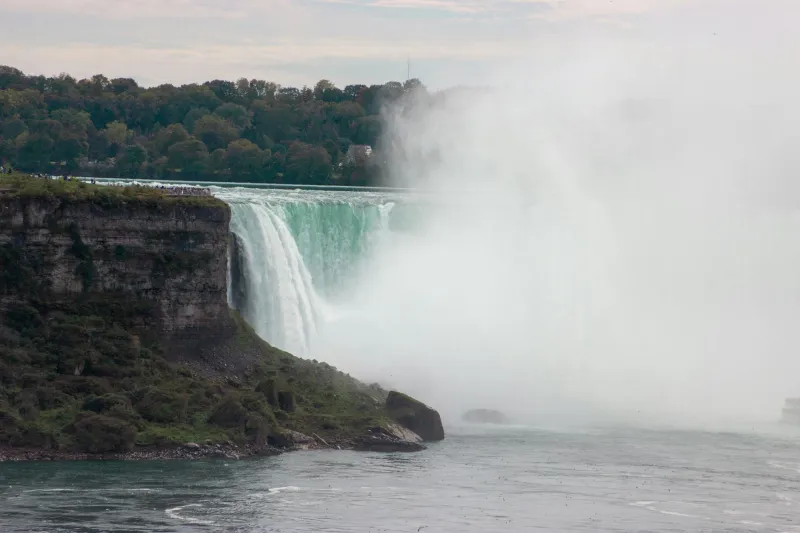
Niagara Falls became America's first industrial honeymoon destination not because of its natural beauty, but because three railroad lines converged there. The "romance" of thundering water was actually the sound of a perfectly engineered tourist trap. Hotels sprouted around the falls like mushrooms, each one designed to separate newlyweds from their wedding gift money as efficiently as possible.
The marketing was brilliant. Railroad advertisements didn't sell transportation—they sold transformation. A train ticket to Niagara Falls would turn your marriage into a story worth telling. The same psychological principle drives today's destination wedding industry, which promises that the right location will somehow make your relationship more meaningful.
The Isolation Economy
What made the honeymoon concept so successful wasn't romance—it was removal. Every culture that adopted the practice was dealing with extended family networks that could complicate new marriages. The honeymoon created a socially acceptable reason to extract couples from these networks during the crucial early weeks when financial and social arrangements were being finalized.
In the American South, plantation families used honeymoon trips to New Orleans or Charleston to establish the new couple's independence from both sets of parents. In the industrial North, factory-owning families sent newlyweds to European spas to avoid labor disputes that might involve in-laws picking sides. The destination mattered less than the distance.
This pattern repeats across centuries because the underlying psychology never changes. Humans form alliances through marriage, and those alliances create conflicts with existing family loyalties. Physical separation provides time for new loyalties to solidify without interference from old ones.
The All-Inclusive Algorithm
Modern honeymoon resorts perfect a formula that would be familiar to those 1840s British lawyers: complete control over the couple's environment during a crucial transition period. All-inclusive packages don't just cover meals and activities—they eliminate decision-making. Every choice is pre-made, every experience pre-packaged.
This isn't about convenience. It's about ensuring that the couple's primary relationship during this formative period is with the resort, not with each other's families, friends, or even their own independent preferences. The psychology is identical to those original bridal tours, just with better marketing and swim-up bars.
The most expensive honeymoon packages are the ones that promise the most complete isolation: private islands, exclusive villas, destinations that require multiple flights to reach. The harder it is for anyone else to contact the couple, the more romantic the package is considered to be.
The Social Media Honeymoon
Today's honeymoon serves a new economic function: content creation. Couples don't just travel—they produce marketing materials for destinations, hotels, and wedding vendors. The "romantic" photos posted on Instagram become advertisements that convince other couples to book similar trips.
This isn't accidental. Honeymoon destinations now employ social media consultants to identify the most photogenic spots and times of day. They provide props, lighting suggestions, and even professional photographers. What looks like spontaneous romance is actually a carefully managed content production system.
The psychology remains unchanged from the 1840s: newlyweds want to signal their successful transition to married status. They just do it through curated social media posts instead of formal visits to relatives.
The Business of Forever
Every era designs its honeymoon to serve its economy. Victorian Britain needed legal clearance time and railroad revenue. Industrial America needed year-round tourism and extended family management. Modern America needs content creation and experience-based consumption.
The couple thinks they're buying privacy, romance, or adventure. They're actually purchasing a solution to social and economic problems that have existed for centuries. The honeymoon industry succeeds because it promises to solve the same fundamental challenge that every married couple faces: how to establish their new identity while managing the expectations and interference of everyone else.
The next time you see a couple posting sunset photos from their Maldives honeymoon, remember: you're looking at the latest iteration of a business model that started with British inheritance lawyers and American railroad barons. The technology changes. The psychology stays exactly the same.