Marble Witnesses: Why Hotel Lobbies Hold More Truth Than History Books
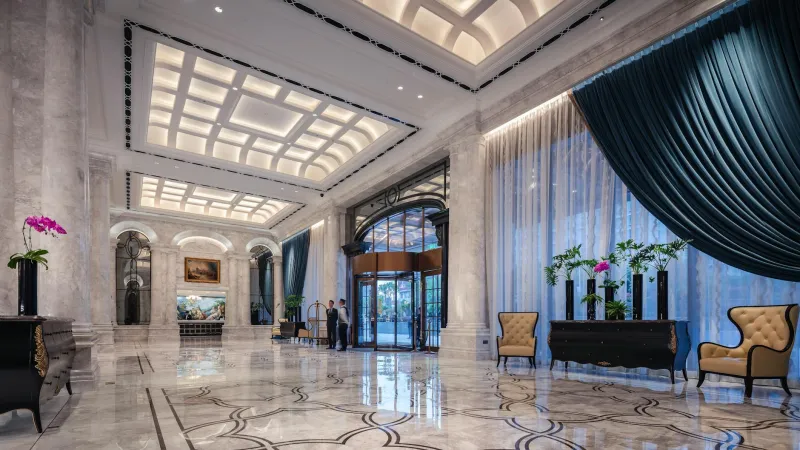
The Stage Where Power Performs
Walk into the Willard InterContinental in Washington, DC, and you're stepping onto the most honest stage in American politics. The marble floors have absorbed more backroom deals than the Capitol building ever has. The lobby's ornate columns have witnessed more genuine human behavior in a century and a half than most university psychology departments observe in a decade.
This isn't about luxury hospitality. This is about understanding human nature through architecture that was built to facilitate it.
The grand hotel lobby emerged in America during the mid-1800s as something unprecedented: a semi-public space where strangers could observe each other without the formal introductions required in private homes. What nobody anticipated was how perfectly this setup would reveal the eternal patterns of human ambition, desperation, and social climbing.
Where Deals Actually Get Made
The Brown Palace in Denver tells this story in gold leaf and marble. Since 1892, its atrium lobby has functioned as an informal stock exchange for the American West. Cattle barons, mining magnates, and railroad executives didn't conduct business in boardrooms—they did it where everyone could see them doing it.
The psychology is ancient and obvious: power needs witnesses. The same impulse that drove Roman senators to conduct business in the Forum drives modern dealmakers to prefer hotel lobbies over private offices. When you're trying to convince someone you're worth their money or their trust, being seen matters as much as being heard.
Every grand hotel lobby operates on this principle. The seating arrangements, the sight lines, the acoustic design—all of it serves the fundamental human need to perform status while gathering information about everyone else's performance.
The Archaeology of Ambition
The Chelsea Hotel in New York took this dynamic and twisted it into something rawer. Its lobby became a showcase for artistic ambition instead of financial power, but the underlying psychology remained identical. Writers, musicians, and artists used the space to signal their importance to each other, to potential patrons, and to themselves.
The guest registries from these hotels read like psychological case studies. The signatures get more elaborate as the signers become more desperate for recognition. The handwriting analysis alone would keep a behavioral psychologist busy for years.
But the real evidence isn't in the books—it's embedded in the physical space. The wear patterns on the marble floors map out the paths that anxious deal-makers traced while waiting for meetings. The scuff marks on the baseboards show where nervous feet kicked while their owners tried to project confidence.
Living Museums of Human Nature
Modern hotels gut their lobbies every few years, chasing design trends and efficiency metrics. But the survivors—the grand hotels that kept their original bones—preserve something more valuable than period furniture. They preserve the spatial dynamics that reveal how humans actually behave when they think they're being sophisticated.
The Fairmont San Francisco's lobby still operates according to 1907 social protocols. The seating clusters create natural conversation zones while maintaining clear sight lines for people-watching. The bar placement allows for both public displays of hospitality and private negotiations. Every design element serves the eternal human activities of networking, deal-making, and social positioning.
This isn't accident or coincidence. Hotel architects in the Gilded Age understood something that modern behavioral economists are rediscovering: given the right environment, humans will reliably perform their deepest motivations in public.
The Evidence Is in the Architecture
The Palmer House in Chicago demonstrates this most clearly. Its lobby ceiling, painted with mythological scenes, wasn't decoration—it was psychology. The grandiose imagery encouraged grandiose behavior. Guests unconsciously adjusted their posture, their voice volume, their gestures to match the scale of the space.
The result was theater, but theater that revealed truth. When people perform on a grand stage, they often perform more honestly than they do in intimate settings. The businessman trying to impress a potential investor in the Palmer House lobby in 1895 exhibited the same behavioral patterns as the startup founder pitching venture capitalists in a hotel lobby today.
Reading the Room, Literally
The physical evidence persists in ways that written records don't. The Omni Parker House in Boston still has the original floorboards in sections of its lobby, worn smooth by 150 years of nervous pacing. The pattern of wear tells you exactly where people stood when they were trying to overhear conversations, where they positioned themselves to be noticed, where they retreated when deals went bad.
This is data that no survey or experiment could capture. It's the accumulated evidence of human behavior under pressure, preserved in wood and stone.
The grand hotel lobby was never really about hospitality. It was about creating the perfect laboratory for observing human nature—and the results of that experiment are still running, still collecting data, still revealing the same eternal patterns of ambition and anxiety that drive us today.
Every time you walk through one of these surviving lobbies, you're walking through the largest behavioral study ever conducted. The subjects just happened to be wearing better clothes than your average college sophomore.