The Guest Book That Never Lied: What Roadside Motels Knew About America
The Democracy of the Pen
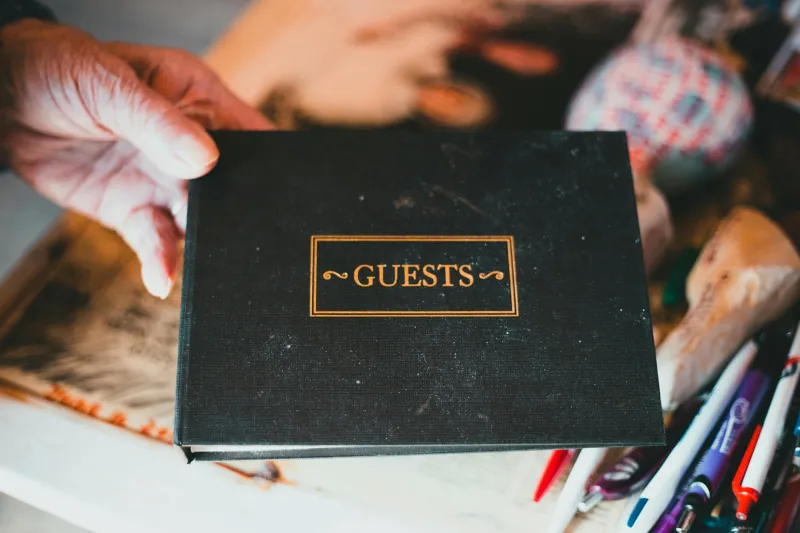
Walk into any chain hotel today and you'll hand over a credit card, show an ID, and receive a key card encoded with nothing more permanent than your checkout date. The transaction leaves barely a trace—a digital breadcrumb that disappears into corporate servers you'll never see. But for most of the 20th century, checking into a motel meant something different: picking up a pen and writing your name in a book that would outlive you.
Those guest registers, thick leather volumes with ruled pages and fading ink, captured something no modern database can replicate: the unvarnished truth of who was actually moving through America. While official records reflected what people wanted the government to know, motel registers recorded what people thought no one would ever read.
The Honest Signature
Human psychology hasn't changed in five thousand years, and neither has our relationship with signing our names. Whether you're a Roman citizen marking your presence at a way station or a 1960s traveling salesman checking into a motor lodge outside Bakersfield, the act of signing a register creates the same psychological moment: you're stating, for the record, that you exist and you were here.
But unlike official documents—tax forms, voter registrations, job applications—motel registers operated in a space between public and private. The clerk might glance at your signature, but the book itself lived in a drawer, accumulating names without judgment. This created what psychologists call a "confession space": a place where people told the truth because they didn't think it mattered.
The result was an accidental census of American mobility that captured what official records missed. In 1963, while the Civil Rights Act was still a year away from passage, the guest register at the Sunset Motel outside Montgomery, Alabama, recorded the signatures of NAACP organizers who couldn't stay anywhere else. The same book documented the aliases of men meeting women who weren't their wives, the real names of musicians traveling under stage names, and the careful signatures of migrant workers spending their first night in a bed with clean sheets.
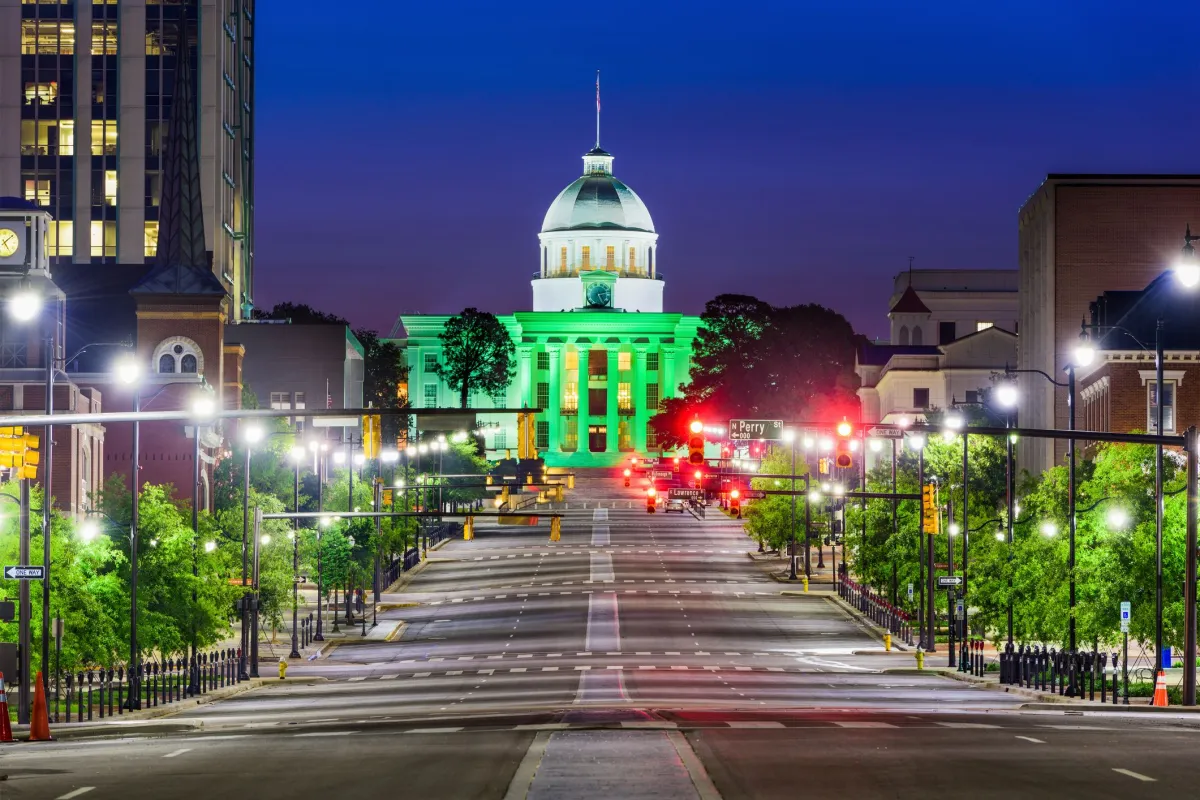 Photo: Montgomery, Alabama, via d.newsweek.com
Reading Between the Lines
At the Desert Palms Motor Court in Twentynine Palms, California—one of the few motels that still maintains its original guest registers—you can trace the patterns of American movement decade by decade. The 1950s pages show the careful penmanship of a generation raised on fountain pens, with addresses that map the great suburban migration. By the 1970s, the handwriting has loosened, and the addresses reflect the mobility of a generation that changed jobs and cities like their parents changed clothes.
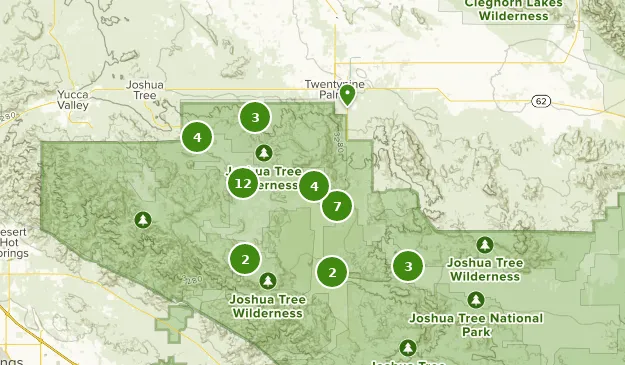 Photo: Twentynine Palms, California, via cdn-assets.alltrails.com
But it's the signatures themselves that tell the deeper story. The businessman from Detroit who signed "John Smith" in 1962 but used his real name in 1968—the same year the Fair Housing Act passed—wasn't just changing his identity; he was documenting America's slow acceptance that mobility was a right, not a privilege. The woman who signed "Mrs. Robert Johnson" in 1955 but wrote "Linda Johnson" in 1975 was recording the feminist movement one signature at a time.
The Psychology of the Road
Motel registers also captured something social scientists are still trying to understand: the psychology of temporary identity. When you're away from home, staying in a place you'll never see again, who do you become? The guest books suggest that Americans used the road as a laboratory for experimenting with different versions of themselves.
The aliases weren't just about hiding affairs or avoiding creditors—though there was plenty of that. They were about testing out names, identities, and stories that didn't fit into the boxes of hometown life. The motel register became a place where the traveling salesman could be an entrepreneur, where the secretary could be an artist, where the farmer's daughter could be whoever she wanted to be for one night.
This impulse—to reinvent yourself when you're away from home—appears in travel records going back to ancient Rome. What changed in mid-century America was the scale: suddenly, millions of people had cars, credit, and the freedom to drive until they found a place where nobody knew their story.
The End of Honest Records
The transition to digital check-ins in the 1990s didn't just change how motels operated—it changed what they could know about their guests. A credit card and driver's license create a different kind of record: official, verifiable, and utterly sanitized. There's no room for experimentation, no space for the small lies that reveal larger truths.
The few motels that still maintain guest registers—mostly family-owned places in small towns that never saw the point of upgrading—have become accidental archives of American honesty. At the Starlite Motel in Gila Bend, Arizona, the current register sits next to a stack of older volumes dating back to 1962. The owner, whose family has run the place for three generations, estimates that fewer than fifty motels in the country still ask guests to sign their names.
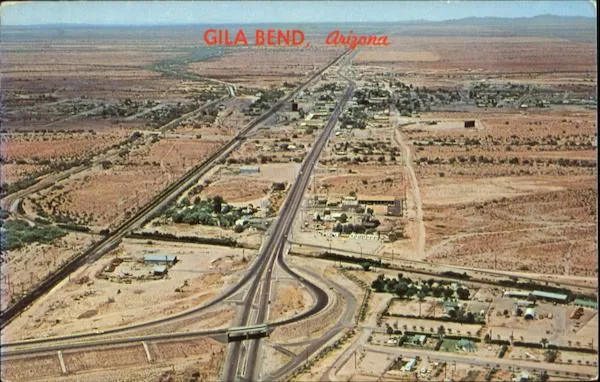 Photo: Gila Bend, Arizona, via www.cardcow.com
What We Lost
The disappearance of handwritten guest registers represents more than just technological progress—it's the end of one of the last spaces where Americans recorded their unguarded truth. In a country built on movement, those leather-bound books captured the real story of who was moving, where they were going, and who they became along the way.
Today, our digital breadcrumbs tell a different story: optimized, monitored, and designed for algorithms that profit from our predictability. The messy honesty of handwritten registers—the crossed-out names, the obvious lies, the signatures that revealed more than they meant to—has been replaced by the clean efficiency of data that never doubts itself.
But for travelers willing to seek them out, those old guest books still exist, filed away in motel offices and local historical societies. They're waiting to tell you something that no GPS or travel app ever could: the truth about where we've been, and who we were when we got there.