Draw a Line, Build a Black Market: The Eternal Economics of the Border Town
Somewhere in the historical record, there is almost certainly a customs official from 1720 writing a frustrated letter to his superiors explaining that the colonists simply do not respect the trade regulations. The molasses is moving anyway. The untaxed goods are crossing anyway. The people living near the boundary have figured out, within a generation of the line being drawn, exactly where the enforcement gaps are and exactly how much risk is worth taking to exploit them.
That letter could have been written in 1820. Or 1920. Or last Tuesday.
The border town is one of the most durable institutions in American life, and the gray economy it generates is not a crime story. It's an economics lesson that keeps running the same experiment and getting the same result.
The Line Creates the Opportunity
Here is the basic mechanism, stripped to its essentials: two adjacent jurisdictions have different rules. The difference in rules creates a difference in prices or availability. People on both sides of the line have an immediate incentive to exploit that difference. Someone sets up a business in the gap.
This is not complicated. It doesn't require bad actors or moral failures. It requires only that the line exists and that the difference is large enough to justify the transaction costs of crossing it.
Colonial American ports ran on this logic. The British Navigation Acts created a regulatory structure that was profitable to circumvent, and the merchants of Newport, Rhode Island and Charleston, South Carolina and a dozen other harbor towns became expert circumventors. Smuggling wasn't a fringe activity conducted by desperate criminals. It was a normal business practice conducted by respected members of the community, many of whom sat on colonial legislatures and went to church on Sundays. John Hancock — the man whose signature is the most famous on the Declaration of Independence — was credibly accused of large-scale smuggling operations. The line between legitimate trade and contraband trade was, in practical terms, wherever the customs inspector happened to be standing.
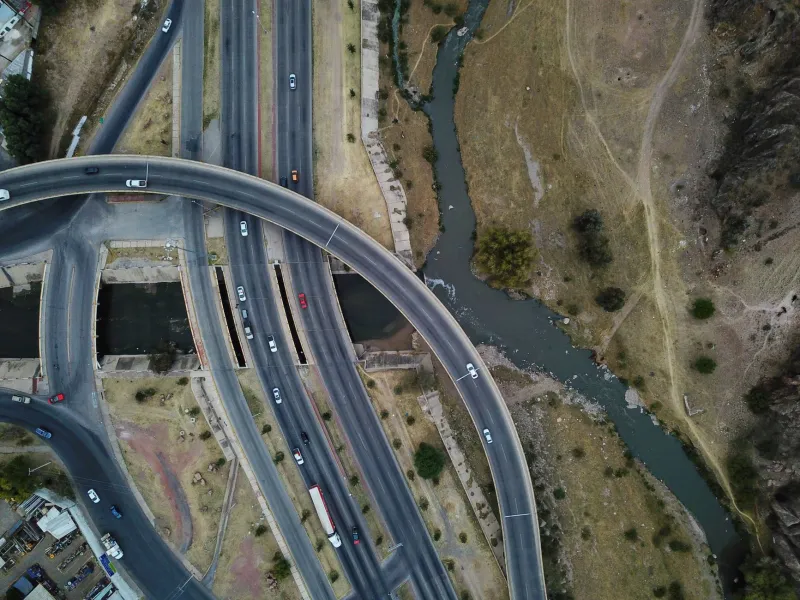
 Photo: Newport, Rhode Island, via sumfinity.com
When the Country Itself Became the Border
Prohibition is the most instructive American case study in border-town economics, because it turned the entire northern and southern boundaries of the country into arbitrage opportunities simultaneously.
Canada didn't prohibit alcohol. Mexico didn't prohibit alcohol. The United States did, briefly and disastrously, between 1920 and 1933. The result was exactly what the basic mechanism predicts: every town within reasonable driving distance of the Canadian border developed a hospitality economy oriented around the fact that legal liquor was available twenty minutes north. Windsor, Ontario existed in a particular kind of symbiosis with Detroit. Bootleggers didn't create the demand for alcohol. The line created the business model.
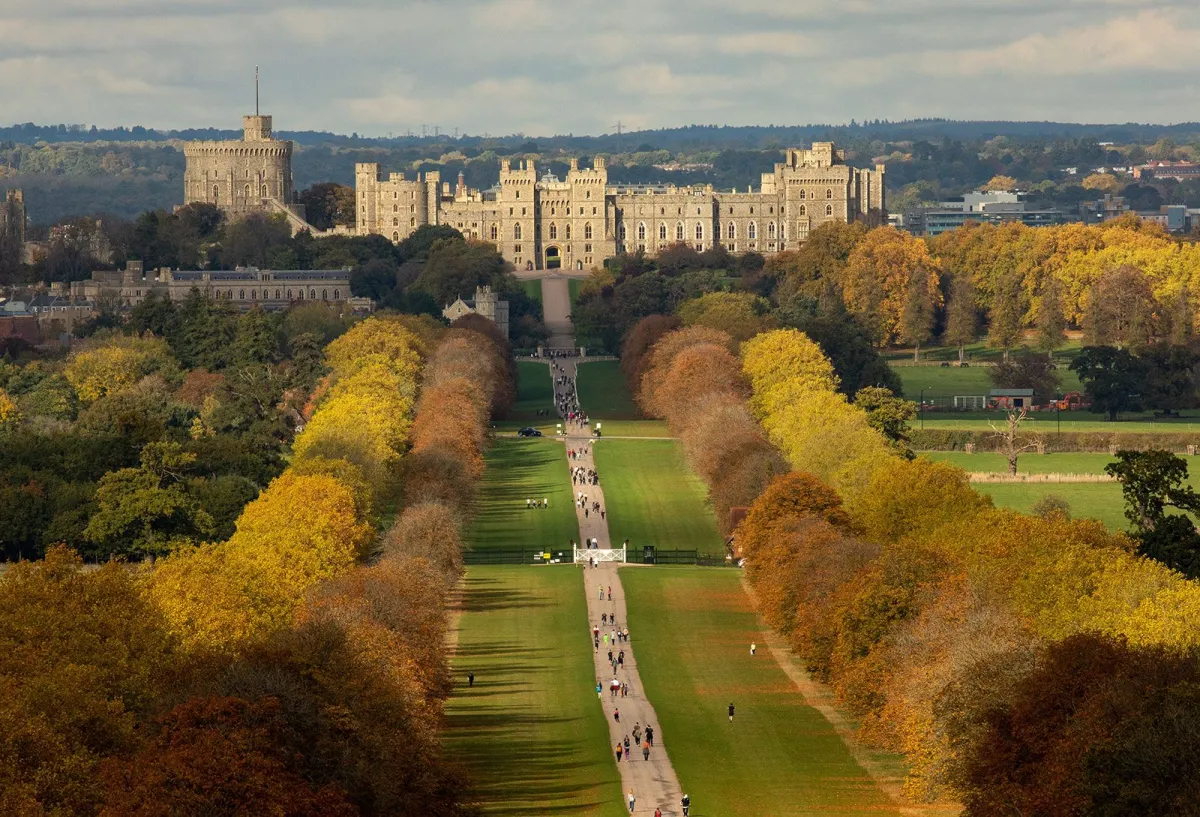 Photo: Windsor, Ontario, via cdn.britannica.com
The southern border ran the same experiment. Towns in northern Mexico that had previously been sleepy agricultural communities found themselves in possession of something suddenly very valuable: proximity to a legal product that Americans wanted and couldn't legally obtain at home. The infrastructure of bars, hotels, and related establishments that grew up in those towns during Prohibition was a direct and rational response to the arbitrage opportunity the Eighteenth Amendment had accidentally created.
When Prohibition ended, the amendment had been repealed but the infrastructure remained. The border-town economy had diversified. It had learned that the gap between two legal regimes was a renewable resource as long as the regimes stayed different.
Reservation Lines and the Modern Gray Zone
The American reservation system created a different kind of border, with a different kind of arbitrage. Tribal sovereignty means that Native nations operate under a distinct legal framework from the surrounding states. For most of the twentieth century, that distinction was mostly a source of disadvantage. But in specific economic domains, it created the same gap that every other hard border creates.
Casino gambling is the obvious case. When surrounding states prohibited commercial gambling, tribes that operated casinos on reservation land were offering something legal within their jurisdiction that was illegal just outside it. The Foxwoods Resort Casino in Connecticut and the Mohegan Sun, both in a state that didn't permit commercial casinos when they opened, drew visitors from across the northeastern United States specifically because the line made them possible.
But the reservation economy has run the same experiment with cigarette taxes, fuel taxes, and a range of other goods where the differential between tribal and state tax rates creates a price advantage. This isn't lawless behavior. It's a sophisticated understanding of where the lines are and what the lines mean.
The communities on both sides of those lines have been having the same argument for decades: the surrounding jurisdictions see lost tax revenue and unfair competition; the tribal governments see sovereign economic development. Both descriptions are accurate. The line produces both outcomes simultaneously.
The Psychology of the Threshold
What makes border-town economics so persistent isn't just the financial logic. It's something more fundamental about how human beings relate to rules.
Psychological research on compliance and rule-following consistently finds that people distinguish between the spirit of a rule and its technical application. A regulation that applies on one side of a river but not the other feels, to most people, like an invitation rather than a prohibition. The arbitrariness of the line undermines its moral authority. You're not evading a principle; you're just crossing a street.
This is why smugglers throughout history have rarely described themselves as criminals. The colonial merchant moving untaxed molasses didn't think of himself as a thief. The Prohibition-era bootlegger running Canadian whiskey across the Detroit River didn't think of himself as a menace to society. The cigarette buyer on a reservation doesn't think of herself as participating in tax fraud. The line feels arbitrary because it is arbitrary — drawn by a legislature, not discovered in nature — and the human mind is very good at identifying and exploiting the gap between official designation and moral reality.
Standing at the Line
The physical experience of border towns reflects all of this in ways that are visible if you know what to look at. The commercial strips on both sides of a meaningful boundary have a particular character: a concentration of businesses that exist specifically because of the differential, mixed with ordinary local commerce that would be there anyway. You can often tell exactly where the line is just by watching what kinds of businesses cluster near it.
The towns along the Missouri-Kansas border that developed around liquor sales when Kansas went dry. The New Hampshire liquor stores just over the Massachusetts line, catching drivers who've just left a state with higher prices. The duty-free shops that occupy the strange interstitial zone of international airports and land crossings. All of them are the same institution in different costumes: a business that exists because two adjacent authorities made different decisions.
The boundary changes. The product changes. The enforcement regime changes. The fundamental transaction — someone standing at the edge of one set of rules and reaching across into another — has been running continuously for as long as there have been lines on maps.
Which, for practical purposes, is as long as there have been people who wanted to be on the profitable side of one.