Population 4,312 and Extremely Proud of It: What Town Welcome Signs Are Really Trying to Tell You
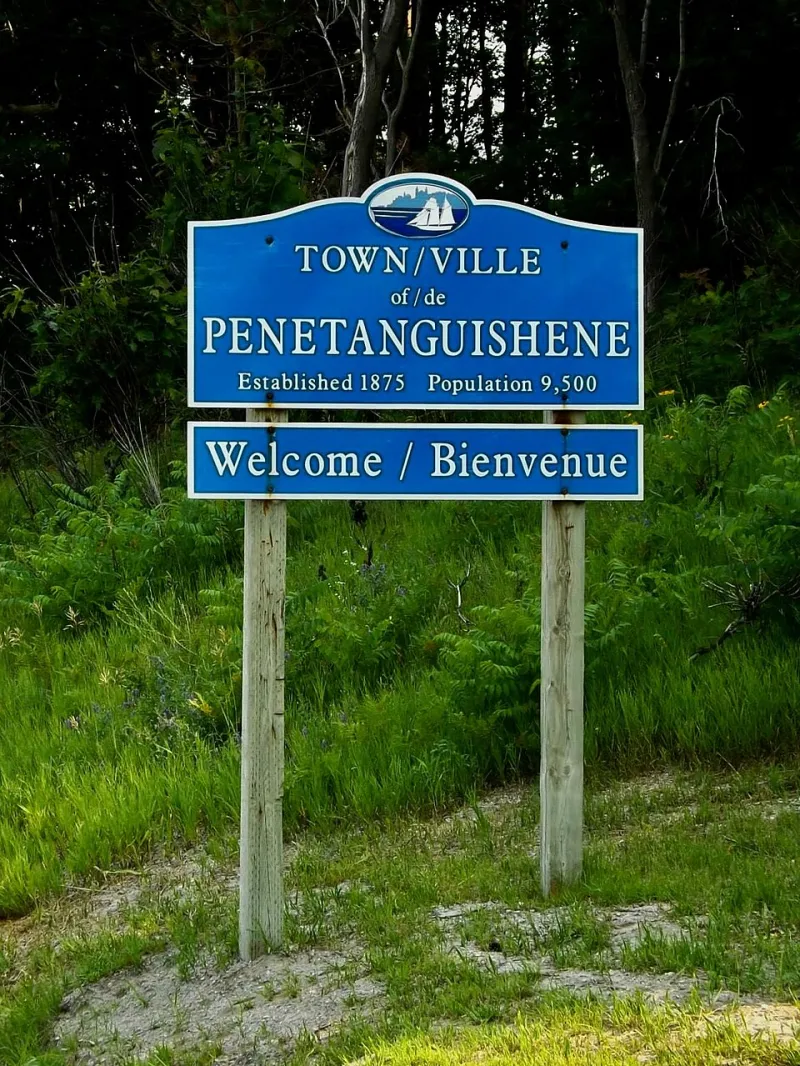
Photo: Andre Carrotflower, CC BY-SA 4.0, via Wikimedia Commons
Somewhere in America right now, a town council is arguing about a sign.
The argument probably started because someone noticed that the population figure on the welcome sign is out of date — it reflects the 2010 census, and the 2020 numbers are lower, and nobody wants to change it. Or maybe someone wants to add "Home of the [Regional Something] Championship" and someone else thinks that's tacky. Or there's a dispute about whether to lead with the founding year or the elevation, and two factions have formed, and the whole thing has been tabled twice.
This is not a trivial argument. Welcome signs are civic self-portraits, compressed into a few square feet of aluminum or wood or illuminated plastic, and every choice embedded in them is a negotiated decision about what a community wants strangers to believe about it. Study enough of them and you stop seeing roadside clutter. You start reading psychological profiles.
The First Impression That Took Decades to Design
The roadside welcome sign is a surprisingly recent invention. For most of American history, towns didn't announce themselves — you knew you'd arrived because the road got better, or worse, or because there was a church steeple visible above the tree line. The commercial signage that preceded modern welcome signs was mostly advertising: this way to the hotel, best feed store in the county, cold beer ahead.
The shift toward civic identity signage accelerated in the 1920s and 1930s, driven partly by the growth of automobile tourism and partly by early boosterism movements that encouraged towns to think of themselves as brands. The logic was straightforward: travelers on the new highway system were making real-time decisions about where to stop, and the first thing a town communicated about itself was going to influence whether those travelers slowed down or kept going.
This is a marketing problem, but it's also a psychology problem. Research on first impressions consistently shows that the framing of an initial encounter shapes how all subsequent information is processed. A town that opens with "Founded 1847" is asking you to see it through a lens of continuity and legitimacy. A town that opens with "Elevation 6,200 ft" is asking you to see it through a lens of geography and distinction. A town that opens with "Friendliest Town in [State]" is making a claim so unverifiable it can only be read as aspiration.
The choice of what to lead with is the choice of what you most want believed.
The Founding Date Problem
Founding years are among the most politically charged elements of any welcome sign, and the dates displayed are frequently contested, occasionally invented, and almost always selective.
What counts as founding? The year the first European settlers arrived? The year the town was formally platted? The year the post office opened, which is often the first federal recognition of a settlement's existence? The year the railroad came through, which is sometimes the moment a cluster of farms became an actual town? Depending on which definition you use, the same community might have four or five plausible founding years, and the one that ends up on the sign is usually the oldest one that can be defended with a straight face.
This matters because founding year is a status claim. In communities where two nearby towns have been quietly competing for regional primacy for a hundred years, a founding date that predates the rival's by a decade is a form of bragging. Towns have been known to commission historical research specifically to find an earlier plausible founding date — not to correct the record, but to win an argument that nobody outside the county is having.
The digital record has made this more traceable than it used to be. County histories, old newspaper archives, and genealogical databases are increasingly available online, which means that a welcome sign claiming "Est. 1831" can now be checked against the historical record in about twenty minutes. Some towns have quietly updated their signs after amateur historians started asking inconvenient questions. Others have not.
Population Figures and the Arithmetic of Pride
The population number on a welcome sign is almost always wrong, and it is almost always wrong in the same direction.
Towns that are growing update their signs promptly. Towns that are shrinking do not. This is not a conspiracy — it's just human nature. Nobody calls a sign company to announce bad news. The result is that the population figures displayed on welcome signs across rural America skew systematically optimistic, sometimes by years, sometimes by decades.
There's a particular poignancy to the towns where the sign still shows a five-digit population figure and the actual current count is somewhere in the low thousands. These signs are not lying exactly — they're grieving. The number is a memorial to what the town was at its peak, preserved in vinyl lettering because changing it would mean admitting something nobody in the remaining community is ready to say out loud.
This is the same psychological mechanism that keeps people from updating their social media profiles after a job loss or a breakup. The public-facing identity lags behind the private reality because updating it makes the loss official.
The Boast Taxonomy
Spend enough time cataloging welcome signs and you start to notice that the boasts cluster into categories, and each category signals something specific about a town's self-image.
Geographic distinction (elevation, proximity to a natural feature, regional location) signals that the town's identity is tied to place rather than achievement. These towns tend to be in areas where the landscape is genuinely remarkable and the community knows it.
Historical claims (founding year, birthplace of a notable person, site of a significant event) signal a town that derives identity from the past more than the present. These signs are common in places where the economy has declined but the history hasn't — the history is what's left to lead with.
Championship claims (state titles in high school sports, regional fairs, livestock competitions) signal a town whose civic identity is organized around community participation and local achievement. These are often the healthiest signs psychologically — they reflect something real that happened recently, involving people who are still alive.
Unverifiable superlatives (friendliest, most beautiful, best-kept secret) signal anxiety. A town that calls itself the friendliest town in the state is usually a town that has been told, or fears, that it's not particularly notable for anything else. The superlative is a preemptive defense.
What You Can Learn Before You Stop
The welcome sign as a research tool is underused by travelers and overused by nobody. But if you start paying attention to what towns choose to say about themselves before you've even parked the car, you'll find that the archives inside — the local history room at the library, the display cases at the chamber of commerce, the conversation with whoever's working the counter at the diner — will make a lot more sense.
A town that leads with its founding year will have a historical society and they will want you to visit it. A town that leads with a championship will have a trophy case somewhere prominent and a story about the season attached to every trophy. A town that leads with its elevation is telling you that the landscape is the point, and the landscape will not disappoint.
And the town with the outdated population figure? Go gently. Something happened there that the sign hasn't caught up to yet, and the people who are still there are still figuring out what to say about it.