The Tab That Ran Forever: How Informal Debt Wired American Neighborhoods Together — and Tore Them Apart
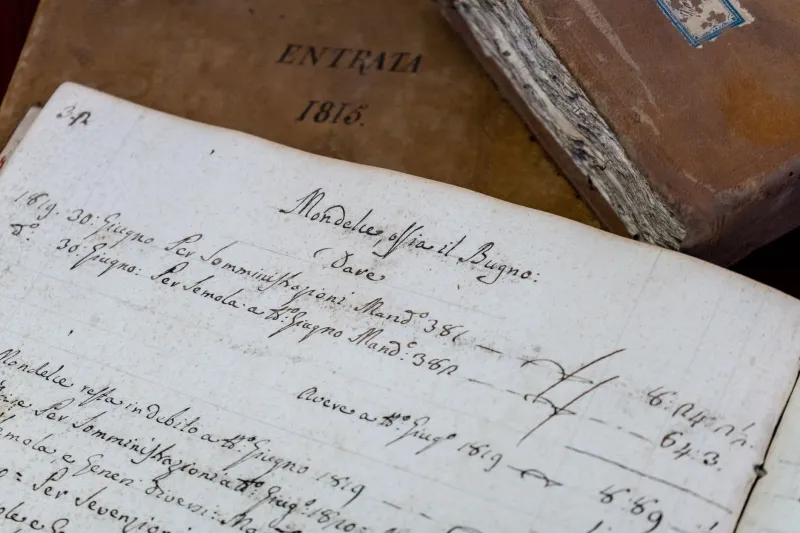
Somewhere in a county historical society in rural Georgia, there is a general store ledger from the 1890s that nobody has fully digitized. It runs to several hundred pages. In it, a storekeeper recorded every credit transaction made by families in the surrounding area over roughly two decades — who bought what, how much they owed, how much they paid back, and, occasionally, a brief notation about why they couldn't. Crop failed. Will settle in spring. Lost the mule.
That ledger is one of the most complete records of how informal credit actually worked in rural America. It is also, read carefully, a map of every friendship, feud, marriage alliance, and social rupture in a twenty-mile radius for twenty years.
Debt between people who know each other is never just financial. It never has been.
The System That Predated the System
Formal banking came late to most of America. For the majority of the country's working population — farmers, immigrants in urban neighborhoods, Black communities systematically excluded from conventional lending, rural families simply too far from a branch — the financial infrastructure of daily life was built out of personal trust and social obligation.
The mechanisms were varied but recognizable. The general store tab, extended season to season against the promise of a harvest. The rotating credit association — known in different communities as a susu, a tanda, or a hui depending on cultural origin — where a group of neighbors each contributed a fixed amount weekly and took turns receiving the full pot. The informal pawnbroker who operated out of the back of another business. The family member who was always owed something by someone.
These weren't primitive substitutes for real finance. They were sophisticated systems calibrated to the actual risk profiles and social structures of specific communities. In many ways, they outperformed formal banking for the people they served, because they were built on information that no credit bureau has ever been able to collect: whether you were the kind of person who paid people back.
The Social Collateral Problem
Here's the thing about lending to someone you see at church every Sunday: the collateral isn't their house. It's their reputation. Their kids' reputations. Their ability to look you in the eye at the hardware store for the next thirty years.
Economists call this social collateral, and it turns out to be extraordinarily effective. Studies of rotating credit associations in immigrant communities — from mid-century Chinese communities in San Francisco to Caribbean neighborhoods in 1970s New York to contemporary Ethiopian communities in Washington, D.C. — consistently find repayment rates that commercial lenders would consider almost impossibly high. Not because the participants are unusually virtuous, but because the cost of default isn't abstract. It's immediate, visible, and social.
This is not a new discovery. It's a rediscovery. The general store keeper in that Georgia ledger understood it intuitively. He knew which families would stretch a debt and which would not, and he extended credit accordingly. His underwriting model was just called knowing people.
When the Ledger Became a Weapon
The same mechanism that made informal credit powerful also made it dangerous. Social collateral cuts both ways.
In the sharecropping South, the plantation store's credit system was one of the primary instruments of economic control. Families ran up tabs for seeds, tools, and food against the coming harvest. The storekeeper — often the same person as the landowner — kept the books. The books were almost always wrong in the same direction. When harvest came, the debt had somehow grown faster than the crop could pay it. The family owed another year. The system was designed to produce exactly this outcome, and it worked for generations.
This is what happens when informal credit loses its reciprocity. When one party controls the ledger and the other party has no recourse — legal, social, or economic — the trust-based system becomes a trap. The same social pressure that enforces repayment in a community of equals becomes a tool of coercion in a community of unequals.
The history of informal debt in America is the history of both possibilities running simultaneously, in different communities, sometimes in the same town.
The Neighborhood Banker Nobody Called That
In twentieth-century urban America, the informal credit network took on new shapes. In Italian-American neighborhoods, the padrone system evolved into a web of small-scale lending that operated entirely outside banks. In Jewish immigrant communities on the Lower East Side, the gemilut hasadim — interest-free loan societies — formalized what had been informal, creating community institutions that funded thousands of small businesses. In Black communities across the urban North, the policy banker — the numbers runner — frequently doubled as a neighborhood lender, extending credit to people who couldn't get it anywhere else.
None of these figures appear in conventional financial histories. They don't show up in Federal Reserve data. But the communities they served were, in many cases, more financially stable at the household level than communities with full access to formal banking, because the feedback loops between lender and borrower were tight and immediate.
When urban renewal programs demolished these neighborhoods in the 1950s and 60s, they didn't just destroy buildings. They destroyed the social infrastructure that made these credit networks function. The people moved. The relationships dispersed. The ledger closed.
What the Absence Reveals
The financial fragility that characterizes large swaths of American life today — the 40 percent of adults who can't cover a $400 emergency expense, the payday loan industry that exists to fill the gap — is partly a story about formal institutions failing to serve everyone. But it's also a story about the destruction of informal systems that once did.
Human beings are not wired for abstract financial relationships. We are wired for obligation to specific people whose faces we know. The five-thousand-year record of human economic behavior is overwhelmingly a record of credit extended through personal relationships, enforced by social pressure, and calibrated by local knowledge that no algorithm replicates.
The ledger in that Georgia historical society isn't just a curiosity. It's a blueprint. The question worth asking, next time you drive through a town where the main street has been hollowed out and the payday lender is the only financial institution left, is not just what was lost economically. It's what was lost socially — and whether those two losses are, in fact, the same loss wearing different shoes.