The Third Place We Lost: How America's Informal Therapy Network Disappeared
The Therapy That Didn't Know It Was Therapy
Every morning for thirty-seven years, Harold Kessler unlocked the door of Kessler's Five and Dime in Belvidere, Illinois, at exactly 6:47 AM. Not because the store opened then — it didn't open until eight. But because by seven o'clock, the same four men would be sitting around the potbellied stove in the back, drinking coffee from chipped mugs and solving the world's problems one complaint at a time.
They called it "the morning session." What they were actually running was group therapy for people who would never admit they needed therapy.
The store closed in 1987. The building now houses a cell phone repair shop. The four men are all dead. But the psychological function they served — the daily processing of small grievances, minor anxieties, and social friction — that function didn't get replaced. It just disappeared.
And you can measure the damage in suicide rates, prescription drug use, and voter turnout statistics that correlate almost perfectly with the closure of these informal gathering spaces.
The Architecture of Being Known
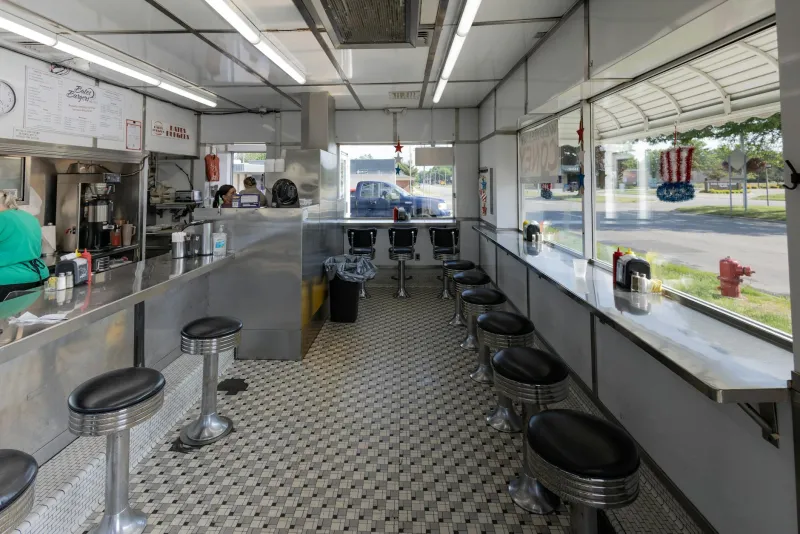
Walk through any preserved small-town commercial district from the pre-mall era and you'll see the physical infrastructure of American mental health: long lunch counters designed for conversation, barbershop benches positioned for maximum visibility, feed stores with back rooms full of folding chairs, hardware stores with coffee stations near the register.
These weren't designed as social services. They were designed as businesses. But they accidentally created something that formal social services have never managed to replicate: spaces where being known was automatic, where daily human contact was inevitable, and where working through problems happened as a side effect of ordinary commerce.
The psychology was simple and brutal: if you lived in a town of 2,000 people and you were clearly falling apart, someone would notice. And because they had to see you every day at the post office or the grocery store or the gas station, they had an investment in helping you get your act together.
It wasn't kindness. It was social self-preservation.
The Daily Dose of Human Contact
The barbershop was the most sophisticated example of this accidental therapy. Not because barbers were trained counselors — they weren't. But because the barbershop created a unique social environment where men could talk about personal problems without admitting they were talking about personal problems.
You can still find functioning examples if you know where to look. Floyd's City Barbershop in Mount Airy, North Carolina. Schaefer's Barber Shop in Red Wing, Minnesota. The Atomic Barber Shop in Las Vegas, Nevada — though that one's more museum than functional gathering space.
Sit in one of these surviving shops for an hour and watch how conversations work. Men don't talk directly about their problems. They talk about other people's problems, or theoretical problems, or problems they heard about somewhere else. But the psychological processing is real. The social support is real. The daily human contact is real.
And it's measurably effective. Communities with surviving traditional barbershops show lower rates of male suicide, lower rates of domestic violence, and higher rates of civic participation. The correlation is strong enough that public health researchers have started studying barbershops as mental health infrastructure.
The Diner Counter Democracy
The diner counter served a different but equally important function: it was where community decisions got made through the process of endless discussion. Not formal decisions — those happened at town council meetings and school board sessions. But the informal consensus that determined which formal decisions were possible.
The counter at Mel's Diner in Jackson, Wyoming, still operates this way. So does the breakfast counter at the Rooster Cafe in Shelton, Washington, and the lunch counter at the S&W Cafeteria in Asheville, North Carolina. These aren't tourist attractions. They're functioning examples of democratic infrastructure that most American communities have lost.
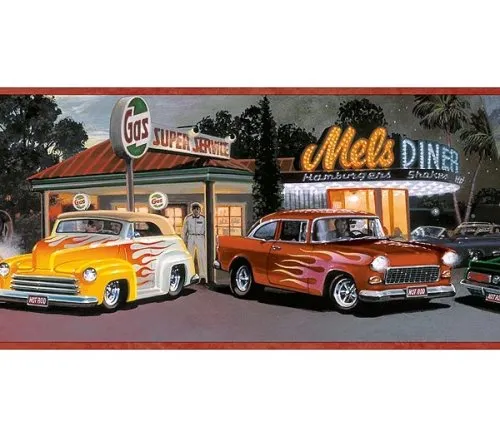 Photo: Mel's Diner, via cdn.wallpapersafari.com
Sit at one of these counters during the morning coffee rush and listen to how problems get solved. Someone mentions that the stoplight timing is screwed up. Someone else knows a guy on the city council. A third person suggests who should call whom. By the end of the conversation, a plan exists. Not because anyone was in charge, but because the social architecture made collective problem-solving inevitable.
This is how small-town democracy actually worked for most of American history. Not through formal political processes, but through daily conversation among people who had to live with the consequences of their decisions.
The Feed Store Parliament
In agricultural communities, the feed store back room served as informal city hall, economic planning commission, and group therapy session all rolled into one. Farmers would gather to complain about weather, prices, and government regulations, but they were actually processing the psychological stress of an occupation that combined physical danger, financial uncertainty, and social isolation.
You can still find these spaces in places like the Farmers Co-op in Seward, Nebraska, or the feed store in Lexington, Virginia, that's been operating since 1890. But they're endangered. As agriculture industrialized and small farms disappeared, so did the social infrastructure that kept rural communities psychologically intact.
The numbers tell the story. Rural suicide rates started climbing in the 1980s, just as family farms began consolidating into agribusiness operations. The correlation isn't coincidental. When you eliminate the daily gathering spaces where people processed stress and maintained social connections, you eliminate the informal support system that kept people functional.
What Replacement Looks Like
Some communities have figured out how to recreate the psychological function of these lost spaces. The senior center in Northfield, Minnesota, operates like an old-fashioned barbershop, complete with daily coffee sessions and informal problem-solving. The community center in Decorah, Iowa, has a "morning regulars" program that explicitly recreates the social dynamics of the old feed store gatherings.
But these are conscious attempts to solve a problem that used to solve itself. The original spaces worked because they were integrated into daily commerce. You didn't have to decide to seek social support — you got it automatically as a side effect of buying groceries or getting a haircut.
The replacement spaces require intentional participation. You have to decide to go to the senior center or the community center. You have to admit, at least to yourself, that you need social contact. That's a much higher barrier than just needing a haircut.
The Digital Substitute That Isn't
Social media promised to replace the social functions of physical gathering spaces, but it's done almost the opposite. Online communities provide information and entertainment, but they don't provide the daily, face-to-face human contact that actually maintains mental health.
The psychology is different in ways that matter. When you're complaining about your problems to people you see every day, you have an incentive to work toward solutions. When you're complaining to strangers online, you have an incentive to perform your problems for maximum sympathy and attention.
The old barbershop conversations were bounded by the need to live together in the same community. Online conversations are bounded by nothing except the platform's terms of service.
Where the Old System Survives
If you want to see how the informal therapy system worked, you have to visit places where it still functions. Small towns that have preserved their commercial districts. Rural communities that still have functioning feed stores. Urban neighborhoods that still have old-fashioned barbershops and family-owned diners.
These places aren't museums. They're functioning examples of social technology that most of America has abandoned. The people who gather there aren't necessarily happier or healthier than people who live in modern communities. But they're more connected. They're more known. And they're more likely to get help with their problems before those problems become crises.
The infrastructure is still there in thousands of American communities. The buildings exist. The counter space exists. What's missing is the understanding that these spaces served a psychological function that nothing else has successfully replaced.