Nobody's Express: The Psychology of America's Emptiest Train Cars
The Mathematics of Loneliness
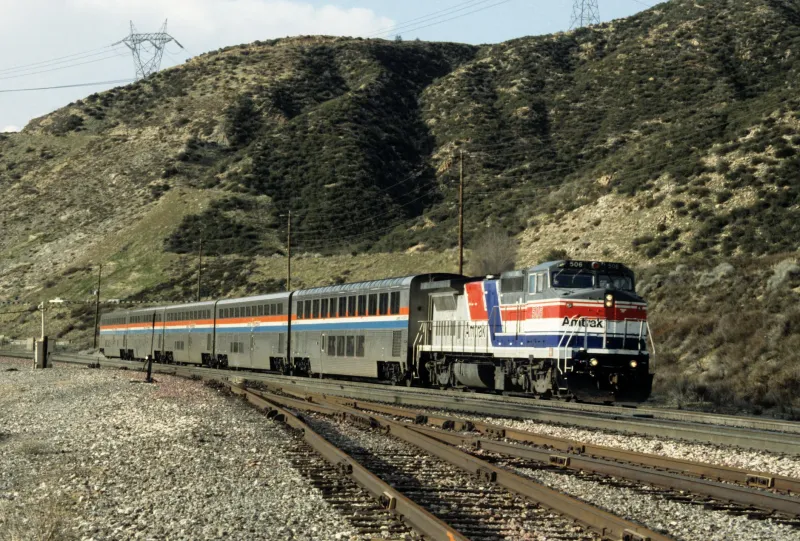
The Cardinal runs three times a week from New York to Chicago, winding through the Appalachian Mountains with the persistence of a mail carrier and the ridership of a family reunion. On a good day, maybe thirty people spread across eight cars watch West Virginia coal towns drift past their windows like scenes from a documentary nobody funded.
 Photo: The Cardinal, via wallpapercave.com
This isn't transportation — it's archaeology in motion.
The human impulse to seek out forgotten places runs deeper than nostalgia. Five thousand years ago, people were already walking past thriving settlements to explore abandoned ones, drawn by the same psychological pull that makes modern Americans board half-empty trains to nowhere. We're wired to learn from ruins, to read the stories that success stories never tell.
The Accidental Museum
Between Huntington and Charleston, the Cardinal traces the Kanawha River through a landscape that industrial America built and then abandoned. Chemical plants stand like concrete cathedrals, their windows dark but their structures intact. The train slows for grade crossings that still interrupt Main Streets in towns where the last business closed when Reagan was president.
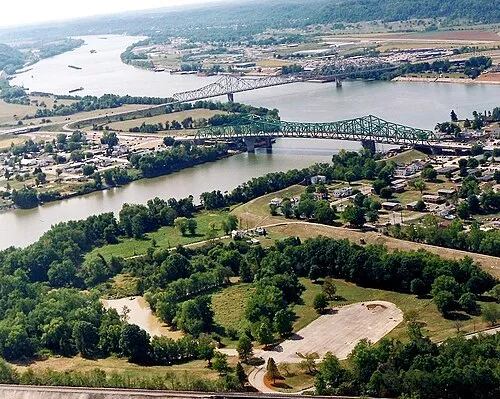 Photo: Kanawha River, via upload.wikimedia.org
Passengers press their faces to windows, photographing scenes that would cost a fortune to recreate as a movie set. Here's Depression-era infrastructure still carrying traffic. There's a company town where the company left but the town remained. Every mile offers evidence of decisions made by people who thought they were building forever.
The psychology is ancient: humans have always been drawn to examine failure up close. Roman tourists visited the ruins of Troy. Medieval pilgrims detoured through abandoned monasteries. Today's train passengers are conducting the same essential research — studying what happens when certainty meets reality.
The Regular Riders
Talk to the people who actually use these routes, and you'll discover they're not tourists playing at being time travelers. They're visiting family in places the interstate bypassed, or traveling to medical appointments in cities their insurance covers. They chose the train because it's cheap, because they don't drive, or because airports don't serve towns with populations under 10,000.
But ask them about the journey itself, and something different emerges. They talk about watching seasons change through the same windows, seeing which farms survived and which didn't, noting when a factory finally gets demolished or when someone starts fixing up a downtown building.
They've become accidental historians, witnesses to the slow-motion story of American transformation. Their regular presence on these nearly empty trains represents something psychologists have documented across cultures: the human need to maintain connection with places that official progress has written off.
What Empty Seats Preserve
The Empire Builder's route through North Dakota passes grain elevators that haven't operated in decades but still stand like monuments to agricultural optimism. The Texas Eagle cuts through small cities where the courthouse square remains intact because nobody had the money to modernize it. The Sunset Limited crosses desert towns that exist primarily to service the railroad that no longer needs much servicing.
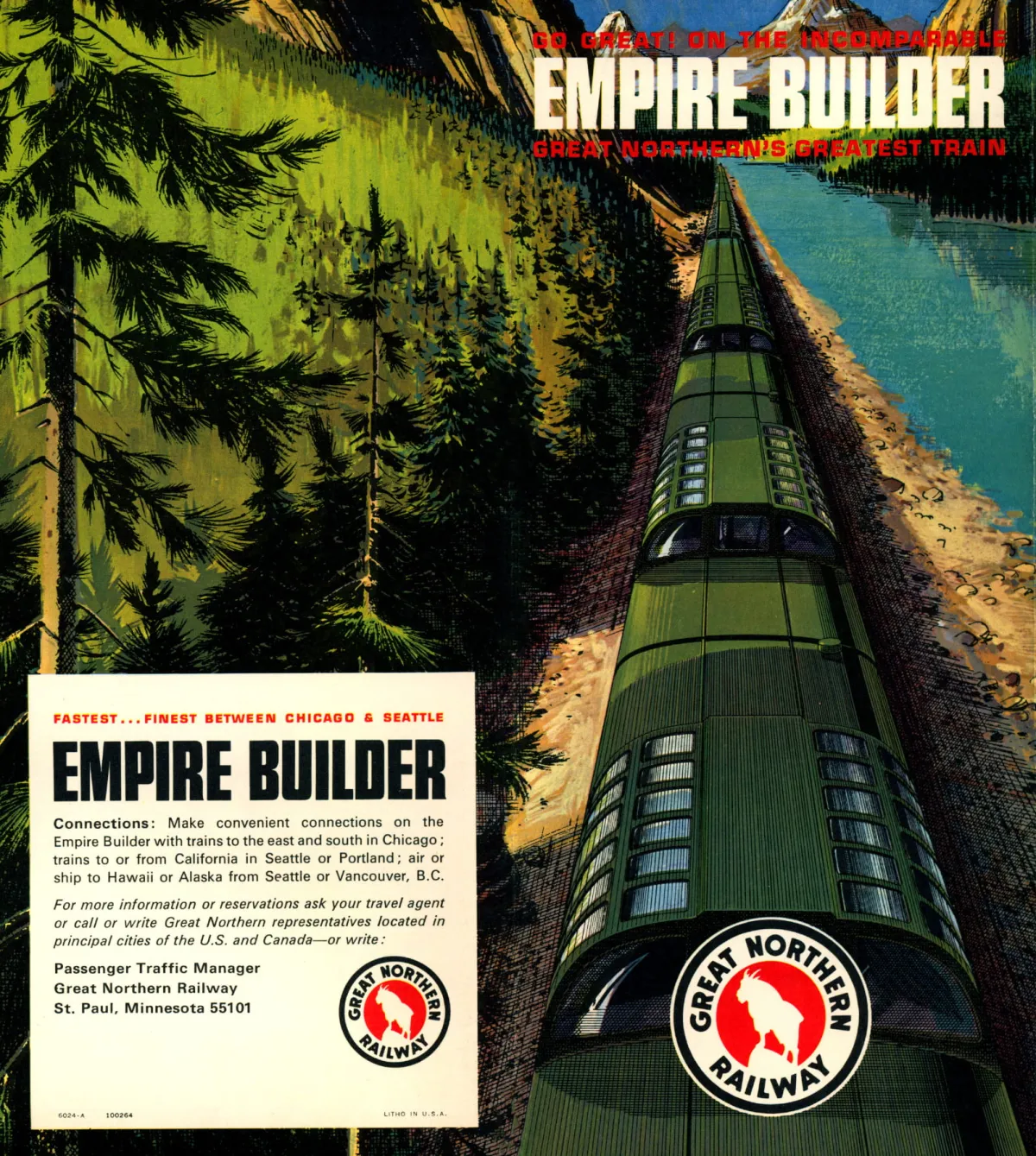 Photo: Empire Builder, via sites.northwestern.edu
These routes survive because abandoning them entirely would cost more than maintaining them minimally. The result is a transportation network that accidentally functions as a preservation system, keeping alive connections between places that market forces would have severed decades ago.
Every civilization develops methods for remembering what it was before it became what it is. Americans built this particular memory system without meaning to, using the simple logic of bureaucratic inertia. The trains keep running because stopping them would require paperwork.
The View from the Last Car
Riding these routes reveals America's most honest landscape — the version that exists between the success stories. Here are the mill towns that didn't become tech hubs, the farming communities that couldn't compete with agribusiness, the mining regions that outlasted their mines.
This isn't poverty tourism or ruin photography. It's something more essential: the recognition that understanding a place requires seeing all of it, not just the parts that made it into the promotional materials.
The passengers who choose these journeys — whether by necessity or curiosity — are participating in an ancient human practice. They're studying the full record of how decisions play out over time, examining the evidence that only becomes visible when the crowds thin out and the marketing budgets run dry.
The psychology behind this behavior hasn't changed since people first started walking through abandoned cities to understand what happened there. We learn as much from studying failure as from studying success — maybe more, because failure strips away the story and leaves only the facts.
The Depot at the End of the Line
These nearly empty trains preserve more than just routes through forgotten landscapes. They maintain a transportation option that connects America to its own past, literally and psychologically. The rhythm of rail travel, the social dynamics of shared journeys, the way distance feels when measured in hours rather than miles — all of this disappears when the last train stops running.
The people who board these trains understand something that the rest of us are still learning: the most valuable historical documents are often the ones nobody meant to create. The real story isn't in the monuments and museums. It's in the ordinary places that survived by accident, the everyday routes that persist through bureaucratic momentum, the landscape that reveals itself only to those willing to take the slow way through.