Bronze Doesn't Lie — But the People Who Cast It Do
Bronze Doesn't Lie — But the People Who Cast It Do
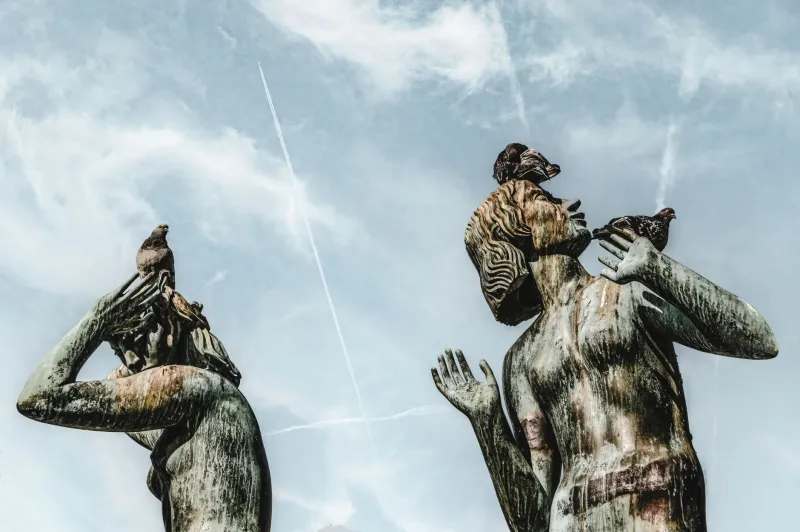
Walk through almost any American downtown on a Tuesday afternoon and you'll find the same thing: a bronze figure on a pedestal, pigeons on the shoulders, nobody looking up. People walk past it every day for years without registering it as anything more than a landmark — turn left at the general, right at the founder. It becomes furniture. Background noise cast in metal.
That invisibility isn't an accident. It's the whole plan.
Public monuments were never really about the person depicted. They were about the people who paid for them, the rivals they were meant to overshadow, and the version of civic identity someone with money and influence wanted locked into permanent form before the opposition got organized. The statue you stopped noticing is still doing exactly the job it was designed to do.
Who Commissions a Monument, and Why
Human beings have been using public sculpture as political currency for roughly as long as they've had cities. The Egyptians didn't carve pharaohs into temple walls because future tourists would find it interesting. Roman emperors didn't plaster their faces across every province because they were vain — well, not only because they were vain. The image in the public square was a declaration: this is who holds authority here, and that authority is so settled it's been rendered in stone.
The American version of this instinct arrived almost immediately after independence. The question of what to do with all the empty squares in the new republic's cities turned into a proxy war over whose vision of America was the correct one. Statues of Washington proliferated. Then Jefferson. Then, depending on where you were standing geographically, the arguments about who deserved permanent civic real estate got complicated fast.
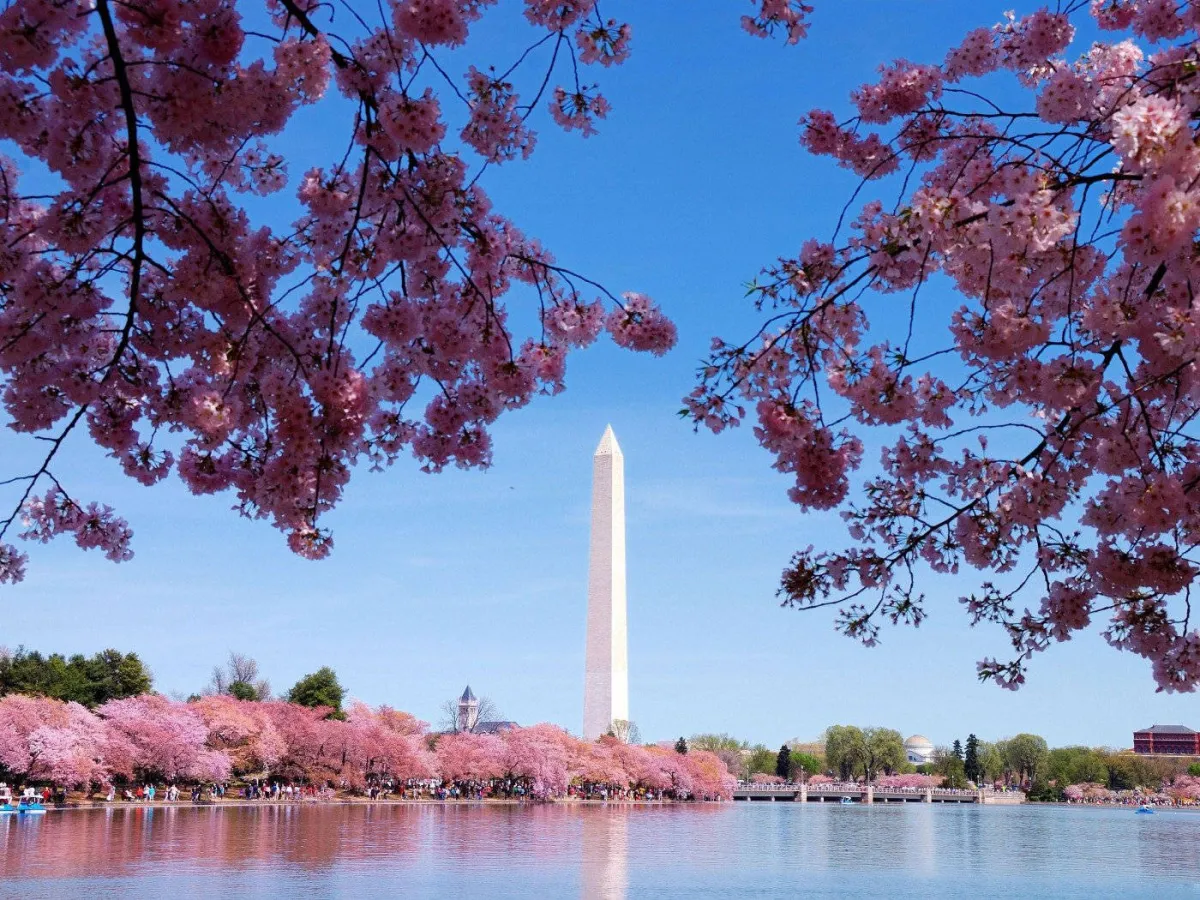 Photo: Washington, via wallpapers.com
After the Civil War, the monument industry boomed. Between roughly 1880 and 1920, Confederate memorials went up across the South at a rate that had almost nothing to do with honoring the dead and almost everything to do with the politics of Reconstruction. Historians have documented this for decades: the spike in monument construction correlates with Jim Crow legislation, not with the end of the war itself. These weren't grief made physical. They were arguments made physical — placed deliberately in front of courthouses and at the centers of town squares, in exactly the spots where civic authority was most visibly exercised.
That's not ancient history. That's the operating manual for how public space gets claimed.
The Real Estate of Memory
Where a monument goes matters as much as what it depicts. This is something every commissioning body has understood intuitively, even when they couldn't have articulated it in those terms.
Placement in front of a courthouse says: this figure and this institution share values. Placement at the entrance to a park says: you pass through this person's legacy to get to the leisure you came for. Placement at the center of a traffic roundabout says: everyone in this city orients themselves around this name, whether they want to or not.
The people who were systematically excluded from those placements understood the stakes perfectly. The long campaign to put a monument to Mary McLeod Bethune in Lincoln Park in Washington, D.C. — which finally succeeded in 2022 — wasn't sentimental. It was a deliberate counter-argument to the existing iconography of a park that had previously featured only white figures. The activists who pushed for it weren't naïve about what they were doing. They were fluent in the same language the original monument commissioners had been speaking all along.
 Photo: Lincoln Park, via fuwanovel.moe
 Photo: Mary McLeod Bethune, via w0.peakpx.com
That's the thing about public art as a power tool: once you recognize how it works, you can't unknow it. And the people on every side of every monument fight, from Richmond to Portland to small county seats in states most people can't locate on a map, are all operating from the same basic understanding of what permanent placement in public space actually means.
The Removal Argument Gets the History Backwards
The debate that surfaces every few years about Confederate monuments — or Columbus statues, or any other contested figure — tends to get framed as a conflict between historical preservation and political correctness. That framing is almost perfectly wrong.
Removing a monument isn't erasing history. The original installation was the political act. Taking it down is just the next one.
No serious historian argues that removing a statue from a courthouse lawn destroys the historical record. The records exist. The archives exist. The history doesn't live in the bronze. What lives in the bronze is the claim — made by whoever commissioned it, in whatever year they commissioned it — that this figure deserves permanent, official, civic endorsement. Contesting that claim isn't anti-historical. It's the same argument the original commissioners were having with their predecessors, conducted in the same medium.
This is what human psychology does with contested territory. It doesn't debate abstractly. It builds things. It names things. It places things in the center of public squares and waits to see if anyone objects loudly enough to matter. The people doing it today are not different from the people who did it in 1895 or 1776 or 44 BC. The material changes. The behavior doesn't.
What the Fights Tell You About the Town
If you want to understand who actually controls a city's civic identity — not who holds elected office, but who holds the deeper, slower kind of power — look at what gets built in public space and, more importantly, what doesn't.
Every monument that exists represents a successful lobbying effort. Every empty pedestal represents one that failed. Every statue that's been moved to a museum represents a power transfer — not a clean one, not an uncontested one, but a real one. The museum placement is itself a political compromise: the figure isn't endorsed anymore, but it isn't destroyed either. It's been reclassified from civic authority to historical artifact. That reclassification is a negotiation, and somebody won it and somebody lost it.
The next time you're walking through an unfamiliar American downtown and you pass one of those bronze figures nobody's looking at, stop for a second. Read the plaque. Note who commissioned it and when. Look at where it's standing in relation to the buildings around it. Ask yourself what argument this object was making when it was new, who it was making that argument to, and whether the people it was meant to impress are still the ones running things.
The statue hasn't moved. But the city around it has. And that gap — between what the monument was claiming and what the city has become — is one of the most honest documents you'll find anywhere in public life.
It's been there the whole time. You just had to look up.