Rest in Pieces: The Long American Habit of Moving the Dead Out of the Way
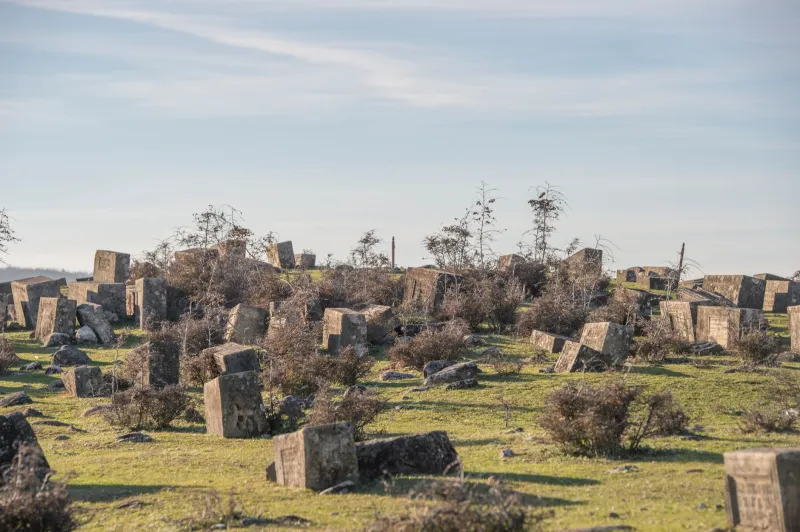
Somewhere in a county clerk's office in rural Tennessee, there is a folder. Inside that folder is a permit application, a survey map, a set of signatures from next-of-kin who may or may not have been easy to locate, and a brief description of why a cemetery needed to be moved. The language is bureaucratic and bloodless. The real reason — a highway interchange, a reservoir, a shopping center that never quite got built — is summarized in a single line.
This folder has thousands of identical siblings across the United States. Moving cemeteries is, in America, a remarkably ordinary thing to do.
The Paperwork of Forgetting
Most Americans don't know that cemetery relocation is a regulated industry with its own professional associations, licensing requirements, and best-practice guidelines. When a municipality or developer needs to move a burial ground, they don't just dig things up and haul them somewhere else — at least, not officially. There are disinterment permits, re-interment permits, notification requirements, and in many states, newspaper announcements that must run for a specified number of weeks in case any living relatives want to object.
The fact that this paperwork exists tells you something important: this happens often enough to require a system.
Estimates are difficult to verify precisely because record-keeping has been inconsistent across centuries, but historians of American burial practices have documented hundreds of major cemetery relocations tied to infrastructure projects alone. The Tennessee Valley Authority, when it built its network of dams in the 1930s and 1940s, relocated somewhere between 15,000 and 20,000 graves across multiple states. The construction of the interstate highway system displaced burial grounds in nearly every state it touched. Urban renewal projects in the mid-20th century moved cemeteries with a frequency that would have shocked the communities that originally established them.
And yet almost nobody talks about it.
The Psychology of the Inconvenient Dead
This is where it gets interesting from a human behavior standpoint, because the tension between honoring the dead and clearing space for the living is not a modern invention. It is one of the oldest recurring conflicts in the human record.
The Romans moved burial grounds when cities expanded. Medieval European cities repeatedly relocated plague cemeteries as populations recovered and land became valuable again. The Egyptians, famously, moved entire necropolises when the political winds shifted. Every time, the justification was some version of necessity — progress, safety, the greater good — and every time, the communities involved experienced something that modern grief researchers would recognize as complicated mourning.
What's consistent across all of these cases, ancient and modern, is a specific psychological pattern: the public rationale for relocation is almost always framed in positive terms (we're building something important, we're honoring the deceased by moving them somewhere nicer), while the private record, when you can find it, tends to show a much messier picture of competing interests, ignored objections, and corners cut.
Visit enough relocated cemeteries and you start to notice the gap between the sign and the story.
What the Signs Don't Say
Many relocated cemeteries have interpretive markers now — small plaques or kiosks explaining that the cemetery was moved to its current location from somewhere else. These markers are, almost without exception, written in the gentlest possible language. "Relocated to accommodate." "Moved to preserve." "Re-established following."
What they rarely mention is who objected and was overruled. They don't mention the families who couldn't be located because their descendants had moved away, or were poor, or were Black in a county where their objections carried no legal weight. They don't mention the graves that were missed, because there are almost always graves that get missed — especially in older cemeteries where wooden markers have long since rotted away and the only record of a burial is in the memory of people who are themselves now dead.
The Freedmen's cemeteries of the post-Civil War South have an especially difficult history here. Many were relocated, or simply bulldozed without relocation, in the early and middle 20th century. Some have been rediscovered by archaeologists working ahead of construction projects, identified by the distinctive burial patterns of African American communities of that era. Each rediscovery comes with a news cycle, a community reckoning, and a set of questions about what happened to the permit folder — if one was ever opened at all.
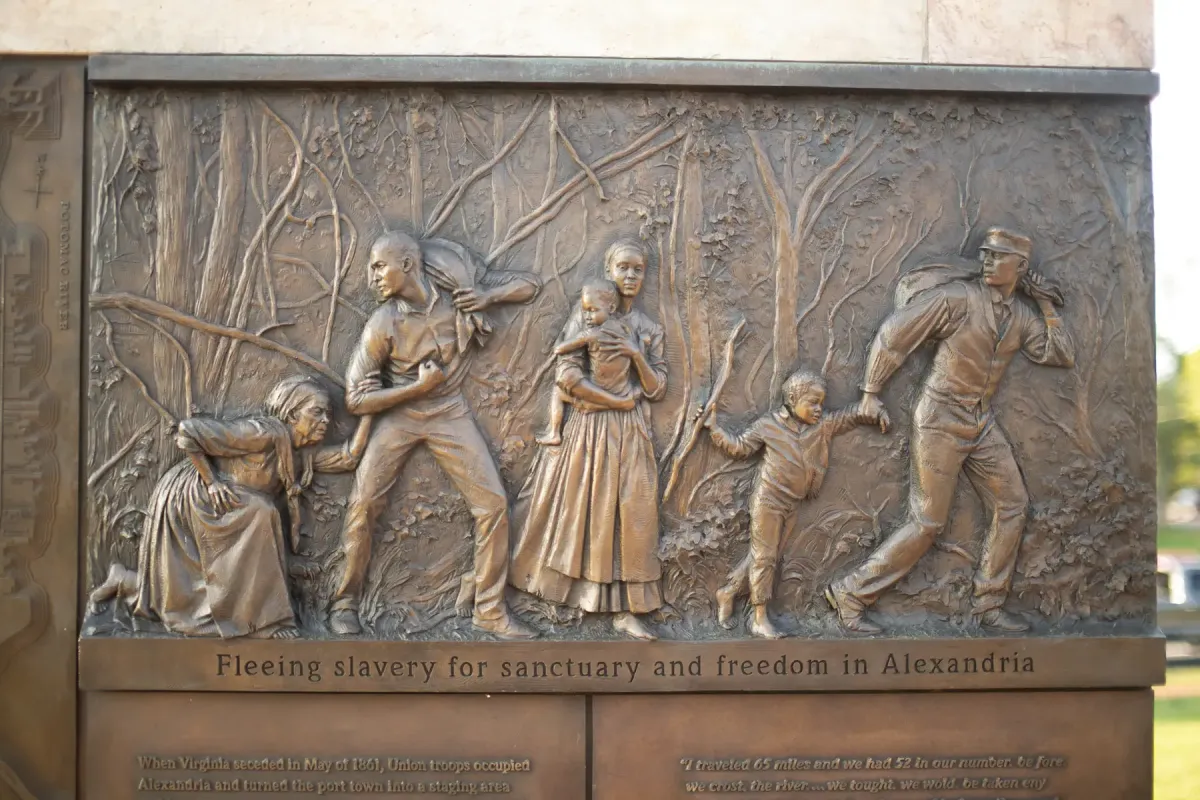 Photo: Freedmen's cemeteries, via outinoldtown.com
A Traveler's Archaeology
If you want to understand how a town thinks about its own history, find out where its oldest cemetery is and ask whether it's always been there.
This is actually easier than it sounds. County historical societies usually know. Local genealogical groups definitely know. The older members of any congregation whose church cemetery got moved know, and they will tell you about it at considerable length if you give them the opening.
What you'll find, almost universally, is that the official account of a cemetery relocation is simpler than the lived experience of it. The permit says the graves were moved to accommodate a reservoir. The families say the county gave them six weeks' notice and the contractor broke headstones. The permit says next-of-kin were notified. The families say they found out when the bulldozers showed up.
This is not a story about malice, necessarily. It's a story about institutional incentives. The people processing the permits had a project to complete. The families had a grief that didn't fit on a form. These two things have always been in tension, and the tension has always resolved the same way.
What Gets Left Behind
Here is something worth knowing if you ever go looking for a relocated cemetery: there are almost always graves left behind at the original site.
Not always intentionally. Sometimes the survey missed the edges of the burial ground. Sometimes wooden markers had decomposed. Sometimes the contractor was moving fast and the oversight was thin. But the result is the same — somewhere under a highway on-ramp, or at the bottom of a reservoir, or beneath the parking lot of a strip mall that's now a Dollar General, there are people who were supposed to have been moved and weren't.
Archaeologists find them regularly. Ground-penetrating radar has made the process faster and more accurate, which means that infrastructure projects now routinely turn up human remains that were supposed to have been dealt with decades ago.
The discovery is always treated as a surprise. It never really should be.
The past has a way of staying where it was put, even when someone files the paperwork to move it. That's not a ghost story. It's just what happens when institutional memory is shorter than the thing it's supposed to remember.