Thirty-Eight Dollars and the Truth: When America's Cheapest Rooms Became History's Most Important Stages
The Courtroom Without a Gavel
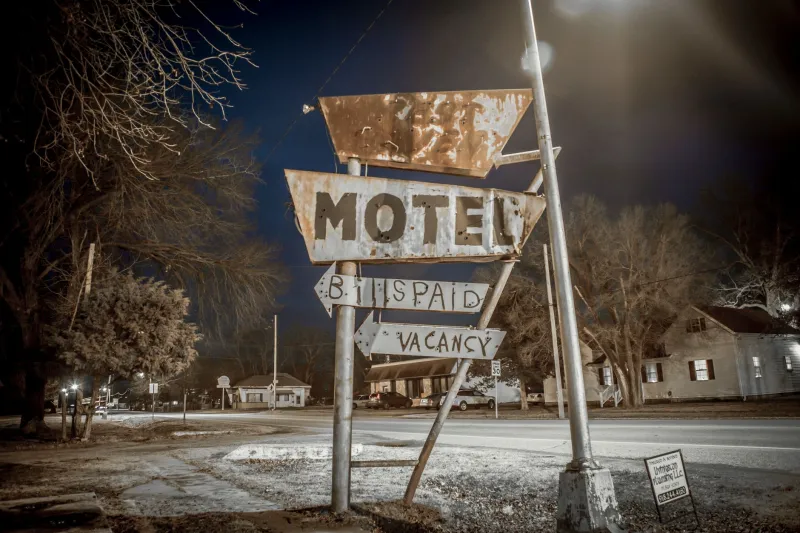
The Dixie Motor Lodge in Selma, Alabama looks like every other aging roadside motel — faded paint, cracked asphalt, a neon sign that hasn't worked since the Clinton administration. But in March 1965, Room 17 served as the unofficial courthouse for one of the most important legal decisions in American history.
 Photo: Dixie Motor Lodge, via mistress-fayme.sissy-fantasy.com
While cameras focused on the Edmund Pettus Bridge, the real negotiations about federal intervention in Alabama happened in a motel room that rented for twelve dollars a night. Justice Department lawyers, civil rights organizers, and federal marshals used the Dixie as their command center because it offered something no government building could: complete anonymity.
 Photo: Edmund Pettus Bridge, via i.pinimg.com
Human psychology hasn't changed since ancient Athens — important decisions happen wherever people feel safe from observation. The difference is that modern America created an entire architecture of anonymity: the roadside motel, where you could check in with cash, park behind your room, and conduct business without anyone asking questions.
The Underground Railroad With Air Conditioning
Motels became America's default venue for sensitive operations because they solved an ancient problem: how to meet without being seen meeting. Every civilization has needed spaces for clandestine activity, but America industrialized anonymity by building thousands of identical rooms along every major highway.
The Starlite Motel outside Youngstown, Ohio hosted union organizers throughout the 1970s who couldn't risk meeting in halls that management might monitor. The Desert Sands in Barstow sheltered witnesses in organized crime trials who needed protection but couldn't afford government safe houses. The Sunset Inn in Memphis became an informal annex to the FBI during the sanitation workers' strike because federal agents needed a place to debrief informants without creating official records.
None of these places advertised their historical significance. Most didn't even know it was happening. But their basic business model — rent anonymous space to anyone with cash — made them perfect venues for America's most sensitive conversations.
Where Democracy Went to Make Deals
The 1968 Democratic Convention made headlines in Chicago's streets, but the actual party platform was negotiated in a Howard Johnson's motor lodge near O'Hare Airport. Labor leaders, civil rights activists, and party bosses spent three days in adjoining rooms hammering out compromises that couldn't happen under television lights.
This pattern repeated throughout American political history. The Civil Rights Act of 1964 got its final language review in a Holiday Inn outside Washington where senators could meet without triggering press attention. The 1973 oil embargo response was coordinated from a Best Western in Houston where energy executives and government officials could appear to be attending separate conferences while actually planning joint strategy.
Motels worked for political dealmaking because they offered something impossible in official venues: plausible deniability. Politicians could claim they just happened to be staying at the same roadside lodge, a coincidence that would seem absurd in any downtown hotel but perfectly normal on an interstate highway.
The Paper Trail That Led Nowhere
Fugitives discovered motels' anonymity advantages early. Unlike hotels that required identification and advance reservations, motor lodges operated on a cash-and-carry basis that created minimal records. Pay for one night, park behind your room, leave before checkout — and you'd generated almost no evidence of your presence.
The FBI spent decades trying to track suspects through motel registries, but the system worked against them. Most roadside establishments kept minimal records, used handwritten logs that were often illegible, and employed night clerks who were paid not to remember faces.
This wasn't criminal enterprise — it was American business culture. Motels competed on convenience and privacy, not security. Their entire value proposition was letting travelers pass through without complications, questions, or paperwork.
The Architecture of Forgetting
Motel design actively encouraged historical amnesia. Identical rooms with generic furnishings created spaces that felt temporary and disposable. No artwork, no distinctive features, no reason to remember being there. This aesthetic of forgettability made motels perfect venues for activities that everyone involved wanted to forget.
But forgettable architecture often preserves history better than monuments designed to be memorable. Because no one thought motel rooms were historically significant, they weren't renovated, restored, or "improved" to match contemporary tastes. Many still contain the original furniture, fixtures, and layout from their most important historical moments.
The Thunderbird Motel in Flagstaff still has the same orange shag carpet that covered the floor when Watergate prosecutors used Room 23 as a secure location for witness interviews in 1974. The Sea Breeze Inn in Galveston maintains the 1960s decor that surrounded union negotiations during the 1969 longshoremen's strike. These accidental time capsules preserve the material culture of American decision-making better than any museum.
Why the Margins Became the Center
Motels succeeded as venues for important business precisely because they seemed unimportant. Their location on highway margins, their transient clientele, and their reputation for hosting affairs and drug deals made them invisible to serious surveillance. Who would think to monitor a place associated with traveling salesmen and adultery?
This camouflage effect explains why so many crucial American decisions happened in seemingly trivial locations. The Pentagon Papers were photocopied in a Ramada Inn. The Pentagon itself was designed in meetings at a motor lodge in Arlington. The interstate highway system was planned in roadside motels that would later depend on that same system for their survival.
What Thirty-Eight Dollars Actually Bought
Today's budget motels still rent rooms for about the inflation-adjusted price they charged during their historical heyday. Thirty-eight dollars buys the same thing it always has: a anonymous space where people can meet, plan, negotiate, or hide without generating official records or public attention.
The difference is that modern surveillance technology makes true anonymity almost impossible. Security cameras, credit card records, and cell phone data create digital paper trails that would have amazed 1960s FBI agents. The era when important decisions could happen in genuinely private spaces may be ending.
But the psychological need for such spaces remains constant. Humans still need places to conduct sensitive business away from observation and judgment. We still require venues where we can speak freely without worrying about consequences. The roadside motel served that function for half a century of American history, turning the margins of our highway system into the center of our political process.
The Rooms That Remember Everything
Next time you drive past a aging motor lodge, remember that you're looking at one of America's most important architectural forms. These buildings hosted more consequential conversations than most state capitols. Their cheap rooms sheltered more sensitive negotiations than expensive boardrooms. Their disposable aesthetic preserved more authentic history than carefully maintained monuments.
The motel room that became a courtroom reveals something essential about American power: it often operates best when it appears to be operating least. The most important decisions happen in the most forgettable places, conducted by people who prefer to be forgotten, in buildings designed to be ignored.
That's the real history lesson written in faded neon and orange shag carpet: sometimes the most significant spaces are the ones that nobody thinks are significant at all.